This 2-day symposium, developed as part of the exhibition ‘Part of the Furniture: The Library of John Bedford’ (Treasures of the Brotherton Gallery, University of Leeds, 9 January – 21 December 2024), and in collaboration with Temple Newsam, Leeds, seeks to explore furniture history as a subject and to reflect on what furniture history of the future might look like.
The history of furniture remains one of the dominant areas of interest within the history of the so-called ‘Decorative Arts’. Since it emerged in the 19th century, scholarship focused on furniture history has expanded far beyond the interests of its earlier pioneers, transforming furniture history as a discipline.
The symposium programme includes a facilitated tour at Temple Newsam (part of Leeds Museums & Galleries) to explore the world-class furniture collections at the house, as well as an opportunity to see extra materials from the collection of John Bedford at the University.
Bookings details and the conference programme are in this link.
Special Collections at University of Leeds Libraries & Leeds Museums & Galleries
CALL FOR PAPERS
What is Furniture History?
Thursday 6th June – Friday 7th June 2024
University of Leeds (& online)
Henry Lawford The cabinet of practical, useful and decorative furniture designs (1855). Image copyright, the University of Leeds Libraries
The history of furniture remains one of the dominant areas of interest within the history of the so-called ‘Decorative Arts’. Since it emerged in the 19th century, scholarship focused on furniture history has expanded far beyond the interests of its earlier pioneers, transforming furniture history as a discipline. This 2-day symposium, developed as part of the exhibition ‘Part of the Furniture: The Library of John Bedford’ (Treasures of the Brotherton Gallery, University of Leeds, 9th January-21st December 2024), and in collaboration with Temple Newsam, Leeds, seeks to explore furniture history as a subject and to reflect on what furniture history of the future might look like.
We invite submissions for papers on themes related to the history of furniture, focused on any period, any geography, from scholars, museum professionals, collectors, dealers, and furniture makers. We invite papers through any lens, including methodological papers on furniture history as method/approach, case studies on objects and collections, papers on furniture historians, as well as work-in-progress papers on possible futures for furniture history.
Contributions might address (not exhaustive):
The history of furniture history
Furniture historians
Publications of furniture history
The sources and materials of furniture history
Furniture collections in museum/historic houses
Collectors and collecting furniture
Studies of individual examples of furniture
Studies of types of furniture
Furniture dealers; the market for furniture
Societies and communities of furniture enthusiasts
The themes of furniture history (style, biography, material, geography etc)
Furniture history of the future
Papers should be 20 minutes in length; participation can be in-person or online (Microsoft TEAMS).
The symposium programme will include facilitated tours at Temple Newsam (part of Leeds Museums & Galleries) to explore the world class furniture collections at the house. As well as an opportunity to see extra materials from the collection of John Bedford at the University.
DEADLINE for submission for proposals (c.200 words) is – MONDAY 15th April 2024 to (m.w.westgarth@leeds.ac.uk). Successful speakers will be notified by FRIDAY 26th April 2024.
Speakers – Free
Conference delegates (in person) £25 per person (2 days) £15 per person (1 day), includes refreshments and lunch and transport to Temple Newsam. Online delegates – Free.
NB: The RFS is pleased to support the costs of attending the What is Furniture History conference in person, for five early career professionals in the field or students (part- or full-time). This special event bursary will cover the ticket fee (£25 two days/£15 one day) and UK travel costs (standard class rail or reasonable alternative) but not overnight accommodation. The bursary is open to existing or new RFS members. Non-members, please note: RFS annual membership costs only £28 by banker’s order (£20 for students) and includes numerous benefits, almost certainly much less than the cost of attending the conference without a bursary, so this may be a perfect opportunity to join the RFS.
Applicants should email the Grants and Bursaries Secretary Nick Humphrey nickhu@vam.ac.uk providing details of your early career professional post or course of study, and the attendance and travel costs you wish to claim. Successful applicants will be required to provide receipts for reimbursement. Applications will be dealt with on a First Come, First Served basis.
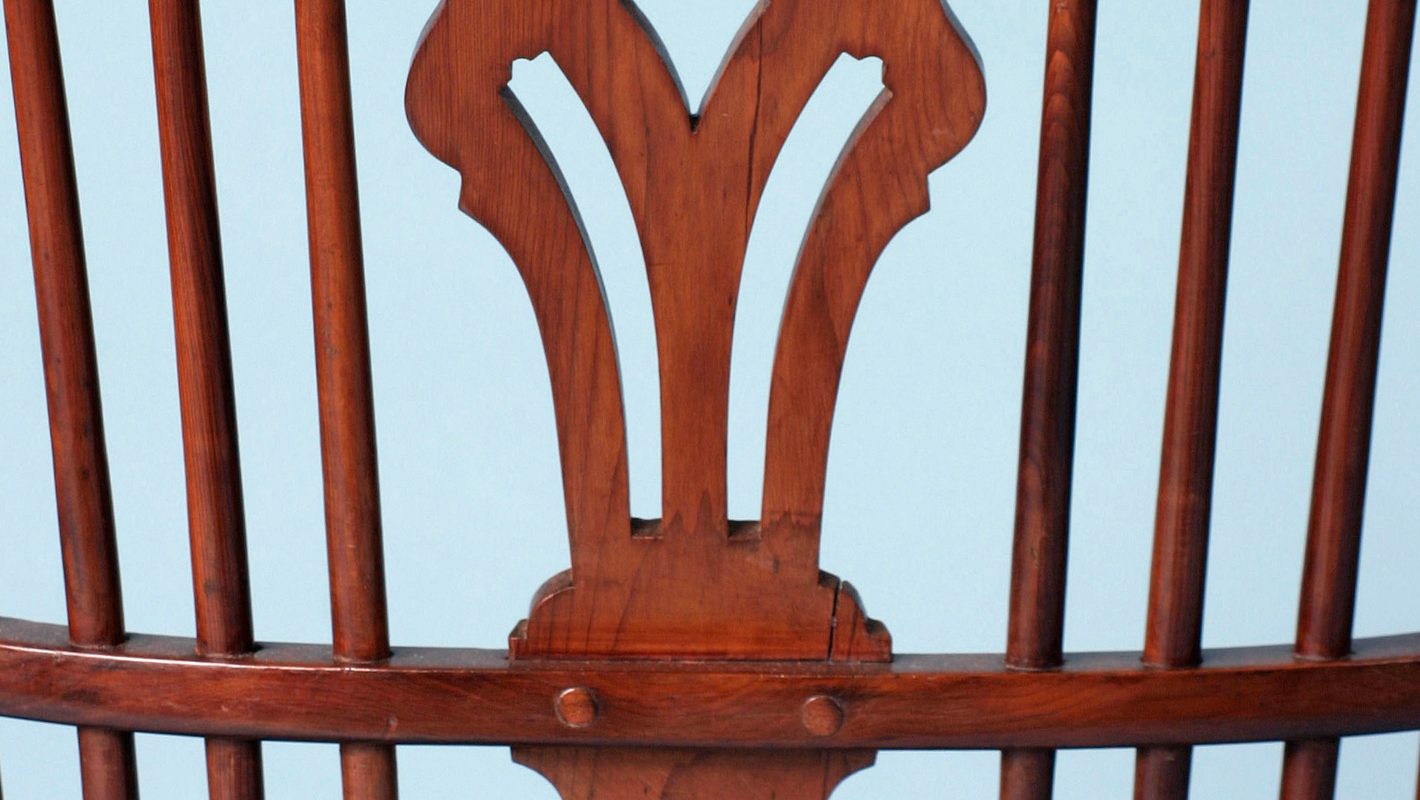
Chair of the month for December is this Wheelback Windsor armchair, made in the High Wycombe area, about 1800-1830. Made from various local woods, including cherry wood, elm, ash, beech and yew.
By the early 1800s, Windsor chair making had become centred on High Wycombe. Wheelback Windsor chairs like this one were made in large numbers. The various timbers have been carefully chosen for the chair part that suits it best. For example, cherry and yew woods are used decoratively on the front legs and in the centre of the wheel in the back. Elm is used for the seat because it was available in wide planks and has an attractive grain pattern. The bow (hoop) is made from ash which bends well without splitting. The back legs are made from beech, which was cheaper and more readily available than cherry wood.
This chair is on display in Wycombe Museum’s ‘Our Place Exhibition’ until 10 March 2024. Information about Wycombe Museum’s exhibitions can be found here Exhibitions | Wycombe Museum Official Site
Chair of the Month is a partnership between Wycombe Museum wycombemuseum.org.uk and the Regional Furniture Society regional furnituresociety.org
November’s chair of the month is this ‘Q – Stack’ chair, designed by Robin Day of High Wycombe in about 1953 and manufactured by Hille in London.
In the 1950s, new ways of constructing chairs were made possible by new materials such as plastic, plywood and tubular steel. This chair uses plywood, with tubular steel legs held on by two bolts. It has a hand grip in the back, so that it can be easily carried. Unlike traditional chairs, several of these chairs can be stacked on top of each other when not being used. It was designed as a low-cost space-saver for meeting places, cafes, halls, and homes.
It is currently on display in Wycombe Museum’s Chair Galleries.
Chair of the Month is a partnership between Wycombe Museum wycombemuseum.org.uk and the Regional Furniture Society regional furnituresociety.org
Chair of the Month for October is the Wycombe Pitt Chair, a Windsor armchair made by John Pitt in the 1740s. It is made from beech with walnut arm-bow, fruitwood legs and elm seat. The maker of this early Windsor chair was John Pitt, wheel maker and Windsor chair maker. He lived in the hamlet of Upton-cum-Chalvey, which is now part of Slough. The chair is painted with the coat of arms of the City of Bath. Upton-Cum-Chalvey was on the main road from London to Bath.
The Wycombe Pitt chair was bought for the museum with the help of The Art Fund, The V&A Purchase Fund and The Beecroft Bequest.
An article about John Pitt was published by the Regional Furniture Society in 2005. You can read it here.
You can see this chair in Wycombe Museum’s ‘Our Place Exhibition’, until 10 March 2024. Information about Wycombe Museum’s exhibitions can be found here Exhibitions | Wycombe Museum Official Site
Chair of the Month is a partnership between Wycombe Museum wycombemuseum.org.uk and the Regional Furniture Society regional furnituresociety.org
The Furniture Makers’ Company is pleased to announce the launch of a new online catalogue of the Frederick Parker chair collection. This unique collection of 191 British chairs dating from the 1670s to 2015 has now been researched, assessed and digitally photographed, to complete the first comprehensive catalogue of the collection. The chairs are fully described in a clear and accessible format suitable for students, historians and anyone interested in furniture history.
The collection was formed mainly in the early 20th century by furniture makers Frederick Parker & Sons, to provide a resource of antique styles suitable for reproduction. As the demand for reproduction furniture declined in the mid-century, the collection became redundant and in 1997 it was saved from disposal by the formation of a trust, the Frederick Parker Foundation, which was able to raise the funds to purchase a significant number of the chairs. The collection is now owned by the Furniture Makers and is on long-term loan to London Metropolitan University, with many of the chairs on display and the rest in controlled storage, accessible for study. Further chairs, especially of the late 20th century, have been added to show a coherent progression of English chairmaking from the 17th century to the present day.
The chair collection is complemented by the Frederick Parker and Parker Knoll Archive, also owned by the Furniture Makers and on loan to the university, providing a fascinating record of 150 years of furniture production.
We encourage visitors, especially students in design, making and upholstery, to make use of this unique learning resource. The online chair catalogue now enables people to study the collection remotely and we hope it will inspire further research and new directions in design and manufacture.
The chair collection catalogued can be accessed here.
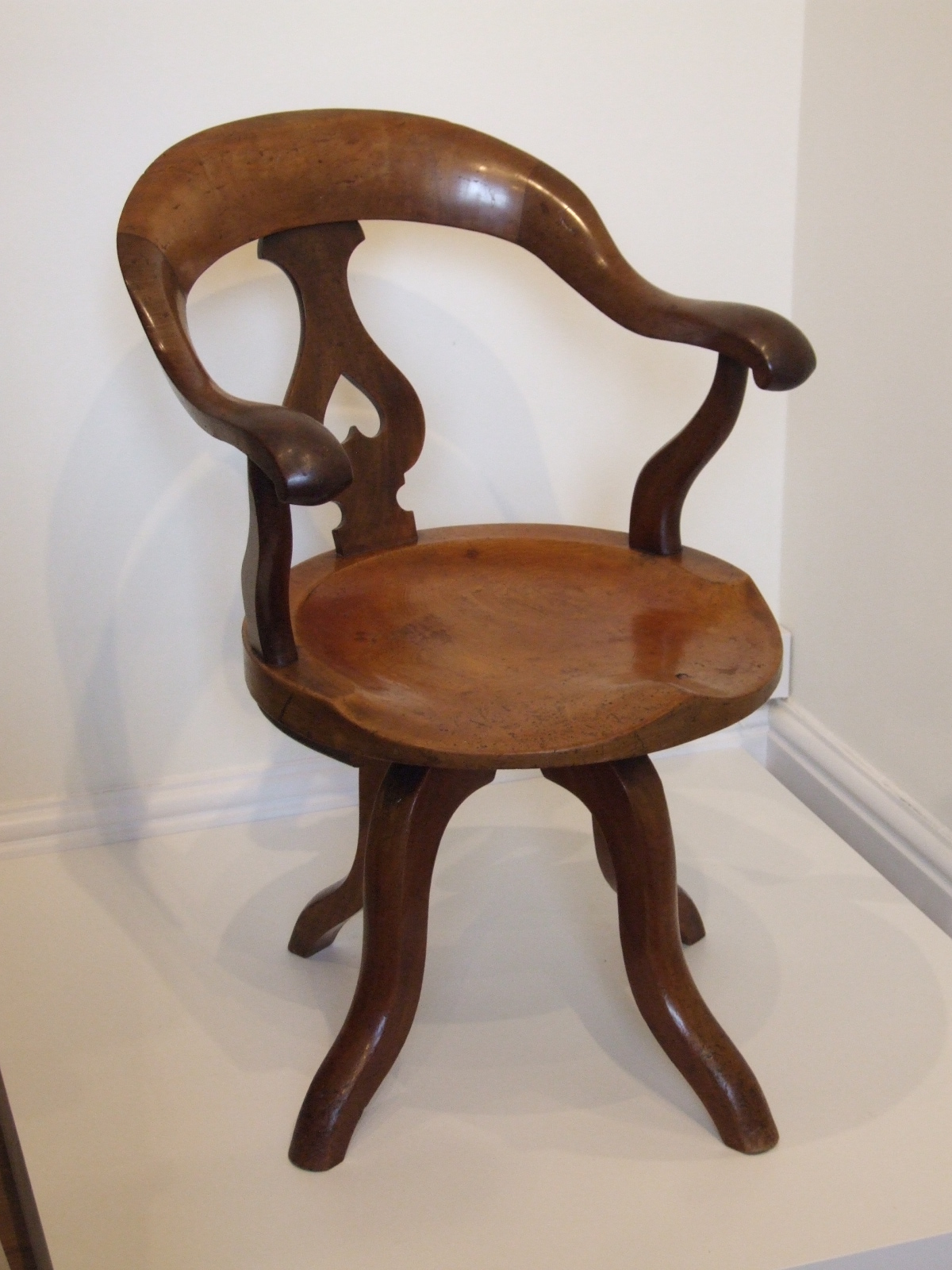
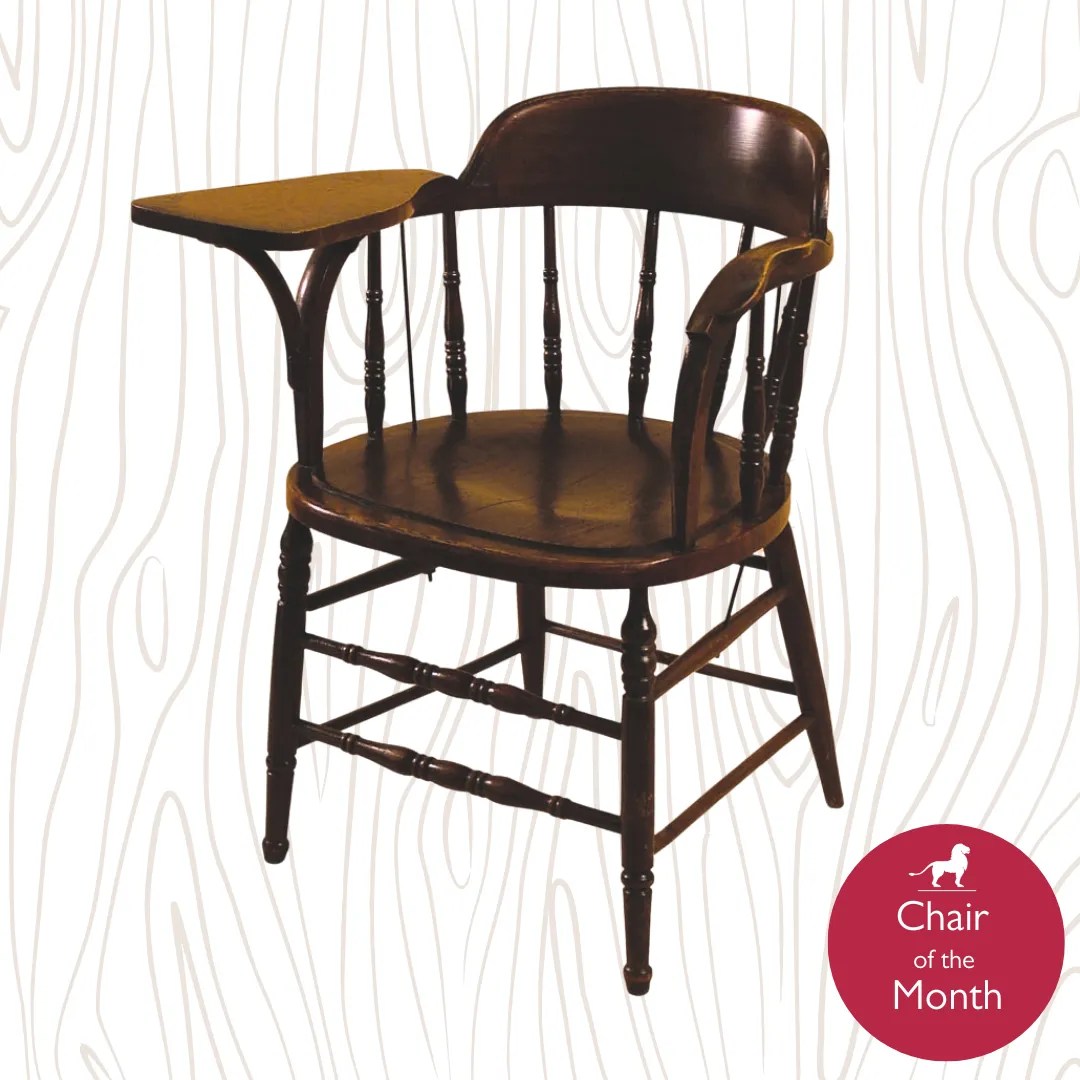
September is back-to-school month! Combined school desk and chair, made in 1909. Unlike most of the artefacts at Wycombe Museum, it wasn’t made locally. It was made by Geo. M. Hammer and Co, of The Strand in London.
As members may be aware, a tour of the Southern States of America is planned for October 2024, studying the regional furniture, houses and social context of early settlers, later migrants, farmers and tradespeople, plantation owners and slaves during the 18th and 19th centuries.
We will be guided by Dan Ackerman, Chief Curator and Director of Research at MESDA and RFS American Secretary, whose specialist knowledge in this area is based on many years of academic research and fieldwork.
The tour will be over 11 days from Monday 14 October to Thursday 24 October, with flights to and from Charlotte International airport, and starting at MESDA (Museum of Early Southern Decorative Arts) and Old Salem Museum in North Carolina, heading north to the Shenandoah Valley in Virginia, then east to Colonial Williamsburg and from there south down the coast to Charleston, South Carolina, before returning to MESDA. The tour dates are such that if any of us wanted to stay on for the biennial MESDA furniture seminar, which will be on Friday 25 to Saturday 26 October, it would be simple to do so.
The provisional itinerary is attached below.
We provisionally estimate the cost at £2,500 per person, including flights, accommodation (based on 2 people per room), admissions and insurance etc, but not including lunches and dinners, which will be paid for as we go.
If you are interested in joining the tour, please email events.RFS@gmail.com by 15 September 2023. Those members who have already been in touch about the tour need not respond to this call: you are already on the list.
David Dewing, tour organiser
Provisional Itinerary
Flights from UK to Charlotte International airport, arriving Monday October 14 Tour over 11 days (10 nights) Depart Charlotte International Airport, Thursday October 24 Option to stay Friday and Saturday 25-26 for the biennial MESDA Furniture Seminar
Day 1: Monday October 14
Transfer from Charlotte to MESDA and Old Salem Museums, North Carolina, 84 miles Welcome, introduction and first supper Stay 2 nights MESDA, Monday and Tuesday
Period Room at MESDA (Museum of Early Southern Decorative Arts)
Day 2: Tuesday October 15
MESDA and Old Salem Museums, sites and collections Research and Conservation facilities
Miksch House, Old Salem
Day 3: Wednesday October 16
Travel from MESDA to Harrisonburg, Shenandoah Valley, Virginia, 215 miles Frontier Culture Museum (Staunton, Virginia) Stay 2 nights, Harrisonburg, Wednesday and Thursday
Day 4: Thursday, October 17
Shenandoah Valley Collections Museum of the Shenandoah Valley Two Winchester-area private collections Jeff and Beverley Evans Collection (Dinner)
Frontier Culture Museum, Staunton, Shenandoah Valley, Virginia
Day 5: Friday, October 18
Travel from Harrisonburg to Williamsburg, Virginia, 180 miles Monticello en route, home of Robert Jefferson, house, gardens and slave quarters Stay 2 nights, Williamsburg, Friday and Saturday
Monticello, Virginia
Colonial Williamsburg
Day 6: Saturday, October 19
Art Museums of Colonial Williamsburg Williamsburg houses and sites Research and conservation facilities
Conservation Workshops Colonial Williamsburg, Virginia
Day 7: Sunday October 20
Travel to from Williamsburg to Edenton, North Carolina, 111 miles Cupola House Private Collections
Stay 1 night, Edenton, Sunday
Cupola House, Edenton, North Carolina
Day 8: Monday October 21
Travel from Edenton to Wilmington, North Carolina, 177 miles Free time in Wilmington Stay 1 night, Wilmington, Monday
Roanoke River Lighthouse, Edenton
Day 9: Tuesday, October 22
Travel from Wilmington to Charleston, South Carolina, 176 miles Drayton Hall plantation house en route Stay 2 nights, Charleston, Tuesday and Wednesday
Drayton Hall, South Carolina
Day 10: Wednesday October 23
Charleston houses and museums
Nathanial Russel House
Charleston Museum
St. Michaels Church
Slave Mart Museum
Edmonton Alston House, Charleston
Nathaniel Russel House
Day 11: Thursday October 24
Return from Charleston to Charlotte airport, 211 miles Optional: Continue to MESDA for the Furniture Seminar, Friday and Saturday October 25-27
We hope that August brings us good weather and the free time to take a seat and relax in the open air. However, damp or dirty outdoor seats can be a problem, especially in the UK. This chair was designed to solve that problem – just turn it upside-down and you would always have a dry seat to sit on! The mystery about this chair though is the date. Is it 18th century, like so many other Windsor garden chairs? It has so many layers of old paint, this seems likely. Or was it made more recently? Chairs like this were patented in 1906. A conservator viewed the chair in 2009 and thought it could be of either date. What do you think?
This low stool was used by several generations of chair seat caners, between about 1870 and 1950. During this time, caning seats was a job mainly done by women. Workers needed a low stool to work comfortably. This stool like a Windsor chair without the back. The last woman to use the stool was Mrs Rolph, who lived in Bowerdean Road, High Wycombe.
You must be logged in to post a comment.