Unknown's avatar

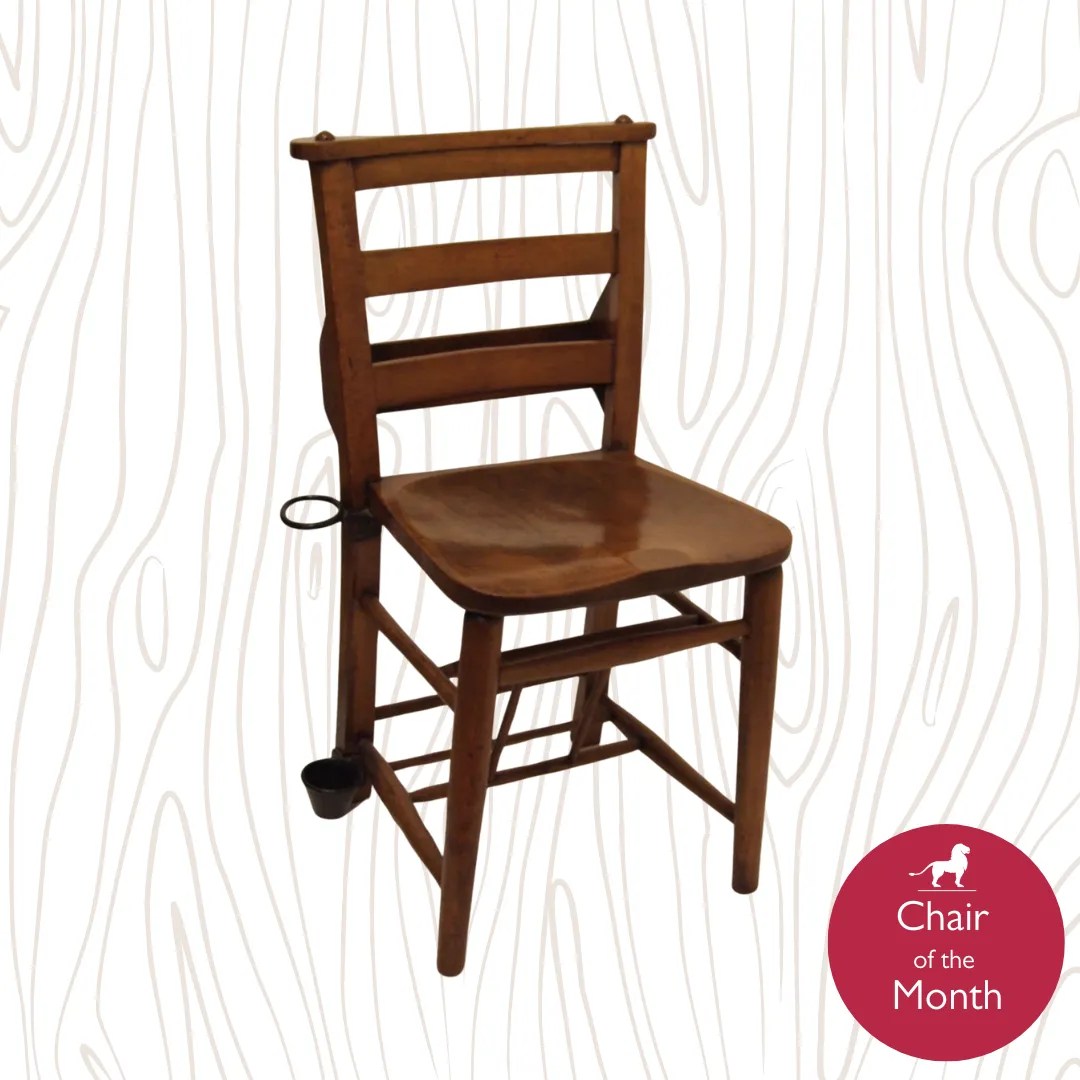
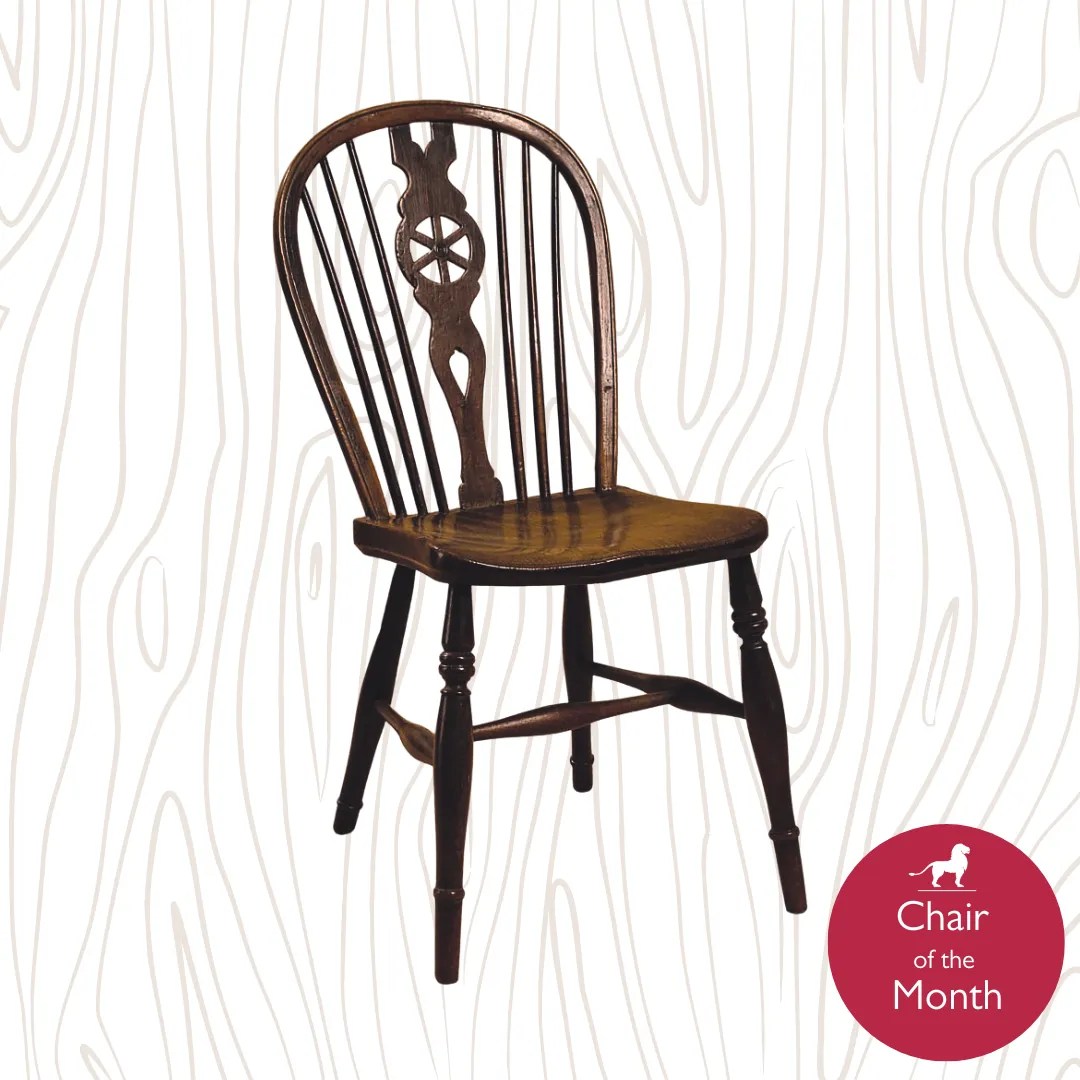
Chair of the Month for June is this Rush-seated Chair made for St Paul’s Cathedral, London

Chair of the Month for June is this Rush-seated Chair made for St Paul’s Cathedral, London

It was made in High Wycombe, probably at Walter Skull’s factory in the 1870s. 

The workers who made the rush seats were known as ‘matters’. Before the 1880s, when local women could still find work as lace makers, most chair seat matters were men. As the hand-made lace industry declined, women began to make rush seats, and from around 1880 onwards, most matters were women.

This chair can be seen in the Hidden Hands exhibition at Wycombe Museum until 10 September. There is a lot more information about chair matting and other Chilterns crafts done by women in the exhibition.

Chair of the Month is a partnership between Wycombe Museum and the Regional Furniture Society.

Unknown's avatar

Chair of the Month for May is this child’s Coronation Chair

Chair of the Month for May is this child’s Coronation Chair

Chair of the month for May is this child’s Coronation chair.

It was made by George Arthur Lane of High Wycombe in 1953 to mark the Coronation of Elizabeth II. George worked for Parker Knoll in High Wycombe and made this chair in his own time. It can be seen in the chair galleries at Wycombe Museum.

The Coronation Chair was 3D scanned for Wycombe Museum by the volunteer and staff team at The National Paralympic Heritage Trust. The images below show the production process.

Click this link to see the 3-D scan.

Chair of the Month is a partnership between Wycombe Museum and the Regional Furniture Society

Unknown's avatar

Chair of the Month for April is the ‘Disraeli Chair’

Chair of the month for April is the ‘Disraeli Chair’

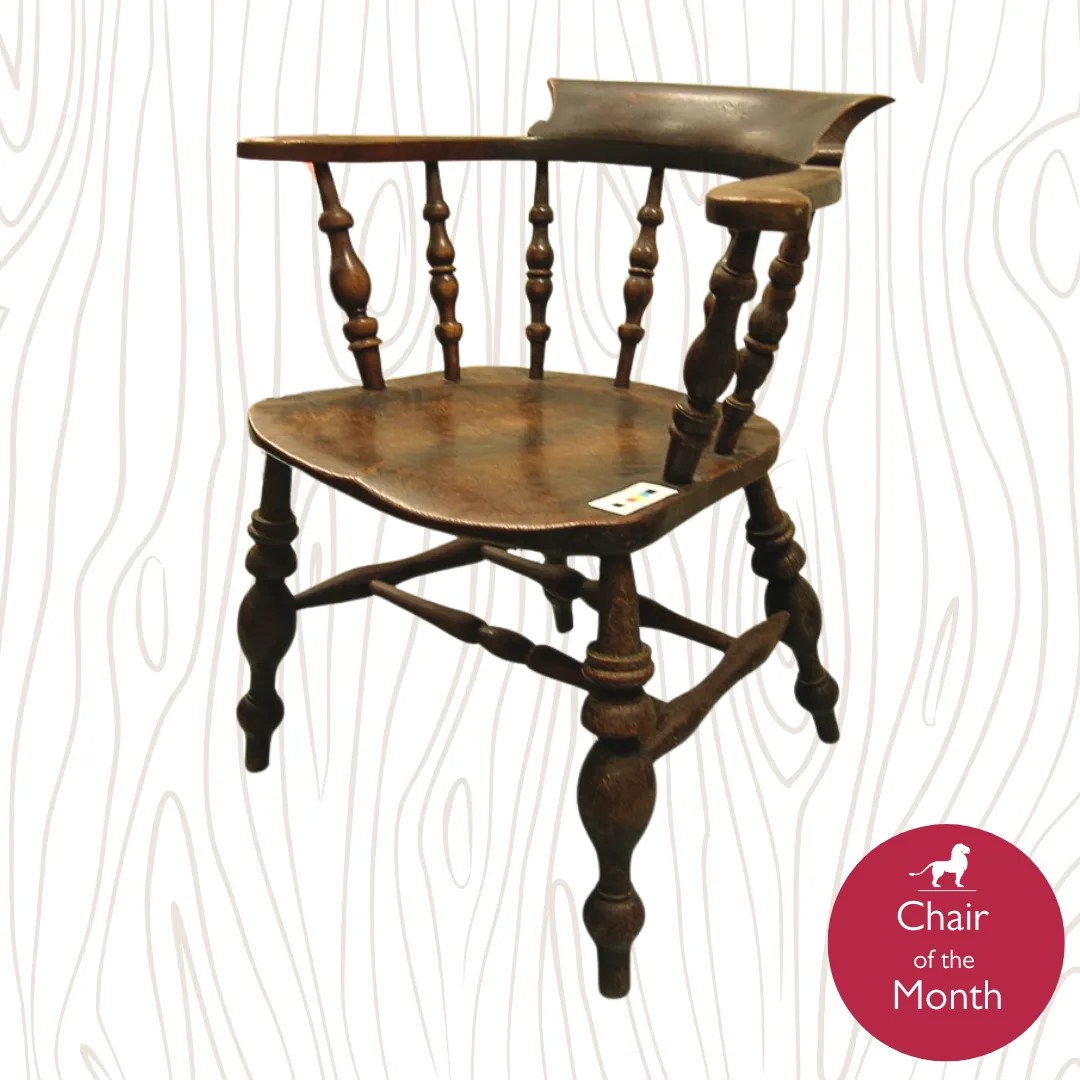
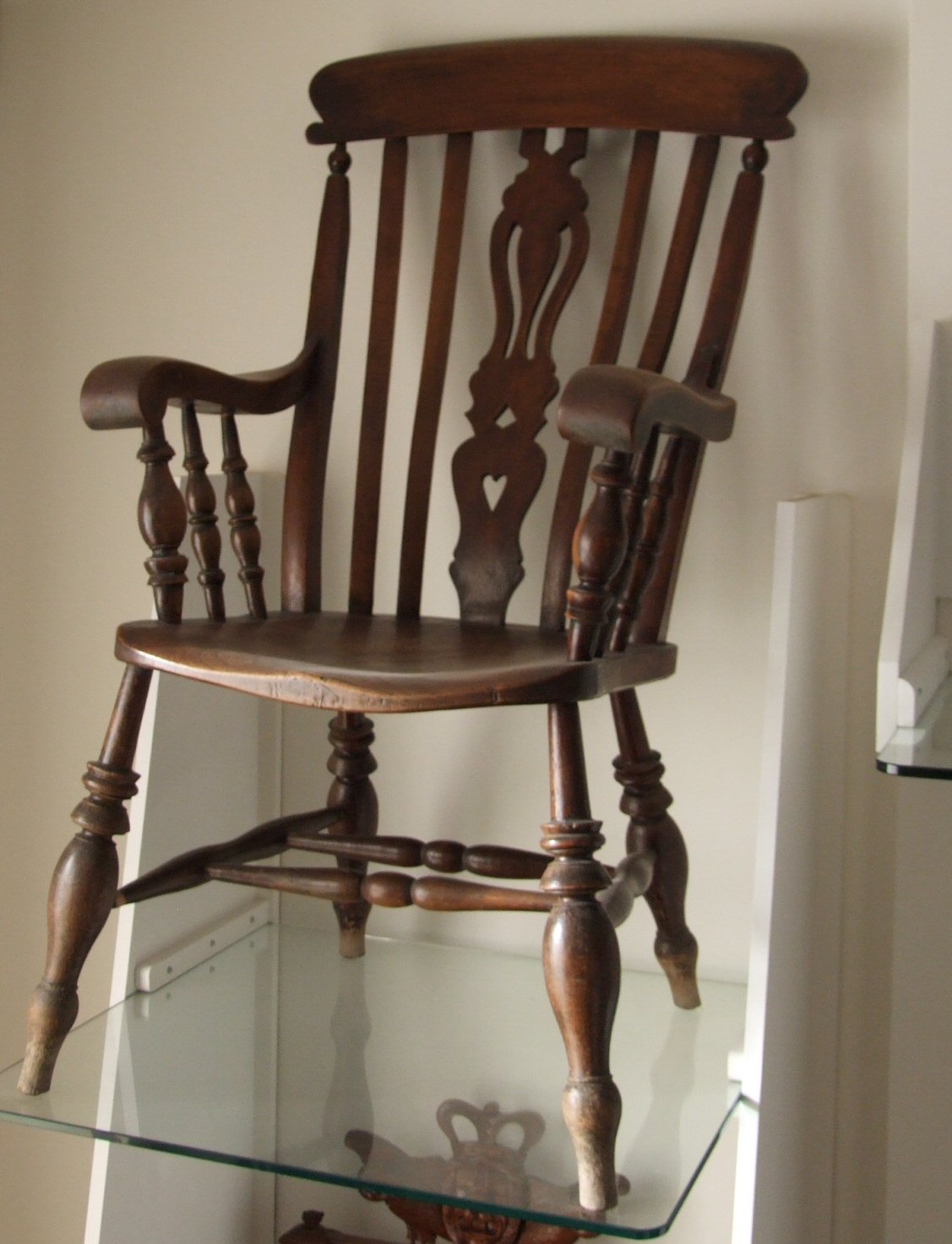
This oversized chair was made by Edwin Skull of High Wycombe in 1876. It was used by prime minister Benjamin Disraeli at the Junior Carlton Club, London, and was still in use at the club until 1978. 19 April marks the anniversary of Disraeli’s death, known as ‘Primrose Day’. Disraeli lived at Hughenden Manor, just outside High Wycombe, now owned by The National Trust. Disraeli is the first and only British Prime Minister of Jewish descent.

This chair can be seen in at Wycombe Museum, together with other items relating to Disraeli including portraits, and the carved Red Lion next to which Disraeli gave his first political speech.  

Chair of the Month is a partnership between Wycombe Museum and the Regional Furniture Society.

Unknown's avatar

Chair of the Month for March is a Cane-seated Fancy Chair from Benjamin North

Chair of the month for March is this cane seated fancy chair from Benjamin North and Sons of West Wycombe, made in about 1857. 

Most furniture makers were men, so it can be easy to forget that caned seats were often made by women and girls. Caning seats was badly paid. Even working full-time, women were often earning a quarter of male furniture worker’s pay – and they were not well paid! But caning work could be done in the worker’s own home, fitting in around to unpaid tasks such as cooking and childcare. As the local lace industry declined, more women took on caning work, so that by the 1880s most chair caners were women. 

This chair can be seen in Wycombe Museum’s exhibition, Hidden Hands, Women and Work in the Chilterns, 7 March – 10 September 2023. The exhibition explores the Chilterns crafts of chair seat caning and matting, lace making, straw plaiting and tambour beading. The exhibition is in collaboration with the Woodlanders’ Lives and Landscapes community history project. Entry to the exhibition and the museum are free. 

The story of Benjamin North’s furniture factory, which was established in West Wycombe in 1853 and moved to Piddington in 1902 is told in ‘Piddington & Furniture’ by Simon Cains and Brian Robertson, published by Coval Consulting Publishing, 2022.  

Chair of the Month is a partnership between Wycombe Museum and the Regional Furniture Society.

Unknown's avatar

Chair of the Month for February is a Miniature Joined Rocking Chair

February’s chair of the month is a miniature joined rocking chair with a heart motif in the splat. The chair is about 10cm high (4”) and was made by local chair maker Stuart King. King gave this chair to Wycombe Museum as part of a group of four miniature chairs in 1977. 

Chairs, miniature and full sized, with and without hearts in the splat were sometimes made as love tokens for Valentine’s Day, and at other times of the year. 

Chair of the Month is a partnership between Wycombe Museum wycombemuseum.org.uk and the Regional Furniture Society regionalfurnituresociety.org

Unknown's avatar

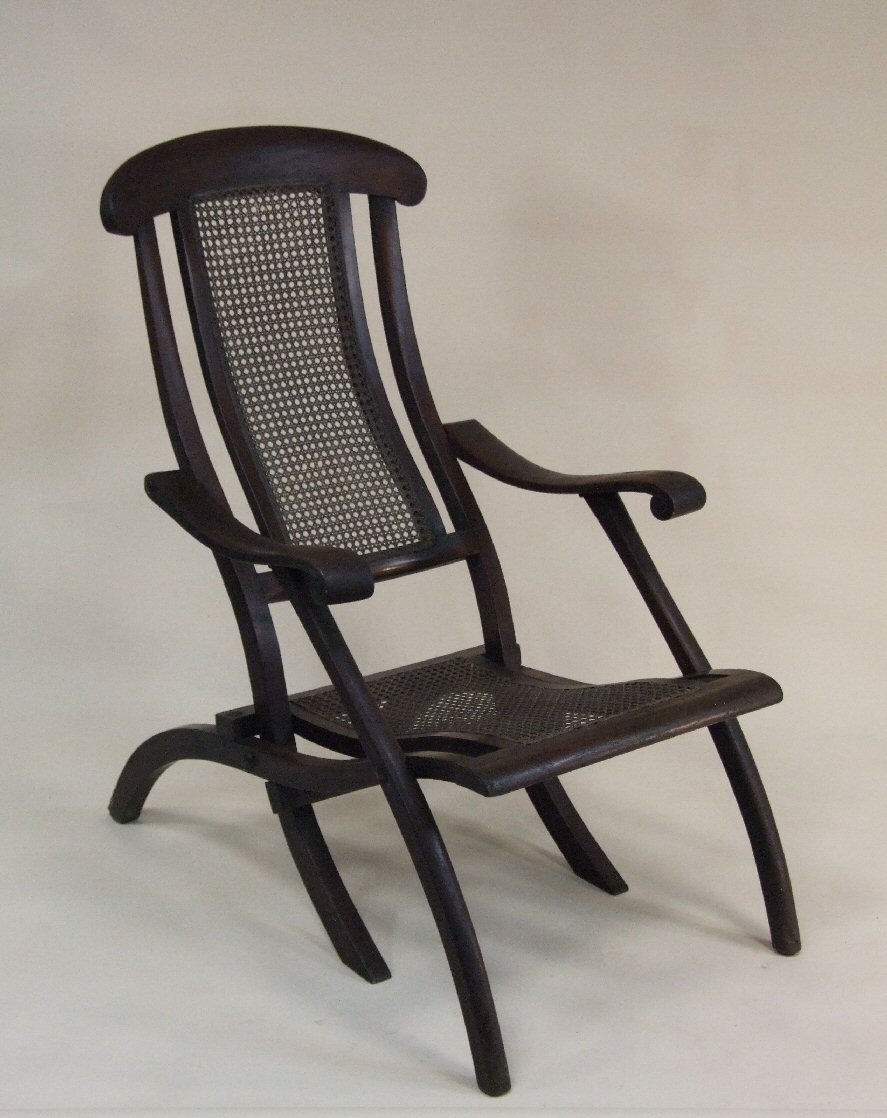
Chair of the Month for January is a wheelchair with a beech frame and caned seat and back, made in High Wycombe c. 1870

January’s Chair of the Month is a wheelchair with a beech frame and caned seat and back, made in High Wycombe in about the 1870s. It is not known which of the many local factories made this chair, but Glenisters certainly made caned wheelchairs and other local makers probably made similar chairs too.  J Mole of High Wycombe specialised in what they called ‘invalid chairs’, from 1918 until their closure in 1935. 

J Mole’s decision to specialise in furniture for disabled people might have been a response to an increased demand due to injuries in World War 1. In the years following World War 2, the Paralympics were established in Stoke Mandeville, Buckinghamshire. The games were initially for injured service men and women. 

Wycombe Museum is exploring the local Paralympic story in Buckinghamshire in collaboration with local young people with disabilities, supported by a Together We Build grant from Bucks Culture. Together We Build is a partnership project centred on the story of the Paralympics.  

Chair of the Month is a partnership between Wycombe Museum wycombemuseum.org.uk and the Regional Furniture Society regionalfurnituresociety.org

Unknown's avatar

Chair of the Month for December is a modern Windsor by Ercol of High Wycombe

December’s Chair of the Month is a modern Windsor by Ercol of High Wycombe. It was made as part of a contract for Wycombe High School when the school moved to the Marlow Hill site in 1956 . The design is part of Ercol’s Windsor Range, launched in 1950. Company founder Luciano Ercolani designed the range, collaborating with draughtmen, craftsmen and engineers, ensuring that each design was practical to produce in the factory. Like the traditional Windsor chairs that inspired the design, this Ercol Windsor is made from elm, beech and ash. 

Ercol were established in High Wycombe by Ercolani in 1920, initially as Furniture Industries Ltd, becoming Ercol in 1928. Ercol moved to the new Princes Risborough site in 2002.

This chair can be seen in the factory area of the chair galleries at Wycombe Museum. 

Chair of the Month is a partnership between Wycombe Museum wycombemuseum.org.uk and the Regional Furniture Society regionalfurnituresociety.org.

For your chance to win a set of Ercol nesting tables and other wonderful prizes donated by local businesses see Christmas Raffle Ticket | Wycombe Museum Official Site

Unknown's avatar

Chair of the Month for November is a First World War stick back Windsor with elm seat and beech legs. Made by Elliott and Son of High Wycombe in 1917

The back of the seat is stamped ELLIOT AND SONS/ A.W.F. / E.S/ 1917 / G.R.V. chairs. It can be seen in the ‘A History of Wycombe in 10 Objects’ display at Wycombe Museum.

During World War 1, High Wycombe furniture factories diversified to make all kinds of wooden items for the military including tent pegs and wooden aircraft parts such as propellors. They also made furniture for the military, including this chair. Similar stamped chairs in Lincoln Cathedral are believed to have come from a military hospital. Elliott’s Factory ran from 1887-1978 and had premises in Shaftsbury Street and Desborough Road. 

Chair of the Month is a partnership between Wycombe Museum wycombemuseum.org.uk and the Regional Furniture Society regional furnituresociety.org

Further information ‘Hybrid Windsors for Military Use: An Adaptation by James Eliott & Sons, High Wycombe’ by Sarah Medlam, Regional Furniture, 2020

Unknown's avatar

The Only Spanish Mediaeval Artesonado Ceiling in the UK: 17 and 18 June at The British Academy

The Torrijos Ceiling

RFS members may be interested in the following.

Discover more about the only Spanish mediaeval artesonado ceiling in the UK: The British Academy Summer Showcase, June 17-18, London SW1Y 5AH. Made in the 1490s in Torrijos for Guitiérre de Cárdenas, chamberlain to Isabella the Catholic, and his wife Teresa Enríquez, the queen’s cousin, this 6m carved and gilded/painted ceiling is the focus of new research. It will be reconstructed and displayed at V&A East Storehouse, opening 2024.

Summer Showcase #8

How a wooden ceiling reveals mediaeval Spain’s diverse culture

The V&A’s Torrijos ceiling is one of four ceilings that came from a palace in the Spanish town of Torrijos. It was made in the 15th century for Christian patrons using Islamic craftsmanship, representing a moment when the Spanish noble elite chose to decorate their homes in a style that fused the cultures of the Iberian Peninsula. Beneath a scaled image of the ceiling, watch master woodcarver Naseer Yasna work with traditional Islamic techniques. Figure out how to fit together small-scale samples of ceiling sections, discover more about Islamic geometry and even have a go at decorating individual pieces to take home with you.

Opening hours:

Friday 17 June: 9am – 3pm

Researcher Late – Friday 17 June: 6 – 9pm

Saturday 18 June: 11am – 5pm

The British Academy

10-11 Carlton House Terrace

London SW1Y 5AH

Free entry: book now (or drop in on the day)