This visit is an exclusive RFS event, whilst the previously listed Symposium is not.
We will meet for coffee in the café of the Parkinson Building, where Mark Westgarth, Associate Professor in Art History & Museum Studies at the University, will talk to us about the library of mainly British furniture books and manuscripts dating from the seventeenth to the twentieth centuries, created by the antiques dealer John Victor Bedford (1941-2019) and gifted to the University of Leeds. Mark is lead curator of the exhibition, which runs until 21 December 2024.
We then travel by public transport to Temple Newsam Museum, which has a cafe for lunching. Adam Toole, Curator of and Furniture and Decorative Art will show us some of the vernacular furniture acquired by Christopher Gilbert, the museum curator and founding member of the RFS who was based at Temple Newsam for his entire working life. The day finishes at 16:30
Cost of the day £10, (refreshments not included) A booking form is available to print from here.
Members may be interested in the following offering from the Furniture History Society and BIFMO:
Join us online every Tuesday throughout June, when curators and historians will consider the evolution and variety of country house interiors in Britain and Ireland created between 1780 and 1950, with an emphasis on furniture makers and designers. Each of the four sessions will deal with a different stylistic phase and will be introduced by either Dr Megan Aldrich (sessions 1-3) or Elisabeth Bogdan (session 4). Every week the introduction will be followed by two experts who will provide case studies on specific country houses, ranging from Castletown House in Co. Kildare to Castle Drogo in Devon. There will also be short Q&A sessions.
Here is an overview of the course programme:
Session 1 – 4th June
Title: Reconsidering the Antique: later neoclassical interiors
Speakers: Dr Megan Aldrich, Dr Kyle Leyden & James Collett-White
🔸🔶🔸
Session 2 – 11th June
Title: Opulence and Excellence in Regency Interiors
Speakers: Dr Megan Aldrich, Dr Alexandra Loske & Adriana Turpin
🔸🔶🔸
Session 3 – 18th June
Title: The Arts and Crafts Country Houses: Alternative Interpretations of the Past
Speakers: Dr Megan Aldrich, Jessica Insley & Annette Carruthers
🔸🔶🔸
Session 4 – 25th June
Title: The Country House in the Twentieth Century
Speakers: Elisabeth Bogdan, Katherine Sharp & Professor Pat Kirkham.
Tickets may be bought for individual sessions or for the entire course, but you will benefit from a discount if all 4 sessions are bought together. Don’t worry if you cannot attend the sessions live because they will be recorded and links to the recording will be sent to ticketholders. These recordings will not be available to purchase after the course has ended. FHS members and ECD members will receive a discount on all tickets.
For further information and to purchase tickets please click here to travel straight to the relevant Eventbrite page. If you have any questions, please contact Ann Davies at bifmo@furniturehistorysociety.org.
This 2-day symposium, developed as part of the exhibition ‘Part of the Furniture: The Library of John Bedford’ (Treasures of the Brotherton Gallery, University of Leeds, 9 January – 21 December 2024), and in collaboration with Temple Newsam, Leeds, seeks to explore furniture history as a subject and to reflect on what furniture history of the future might look like.
The history of furniture remains one of the dominant areas of interest within the history of the so-called ‘Decorative Arts’. Since it emerged in the 19th century, scholarship focused on furniture history has expanded far beyond the interests of its earlier pioneers, transforming furniture history as a discipline.
The symposium programme includes a facilitated tour at Temple Newsam (part of Leeds Museums & Galleries) to explore the world-class furniture collections at the house, as well as an opportunity to see extra materials from the collection of John Bedford at the University.
Bookings details and the conference programme are in this link.
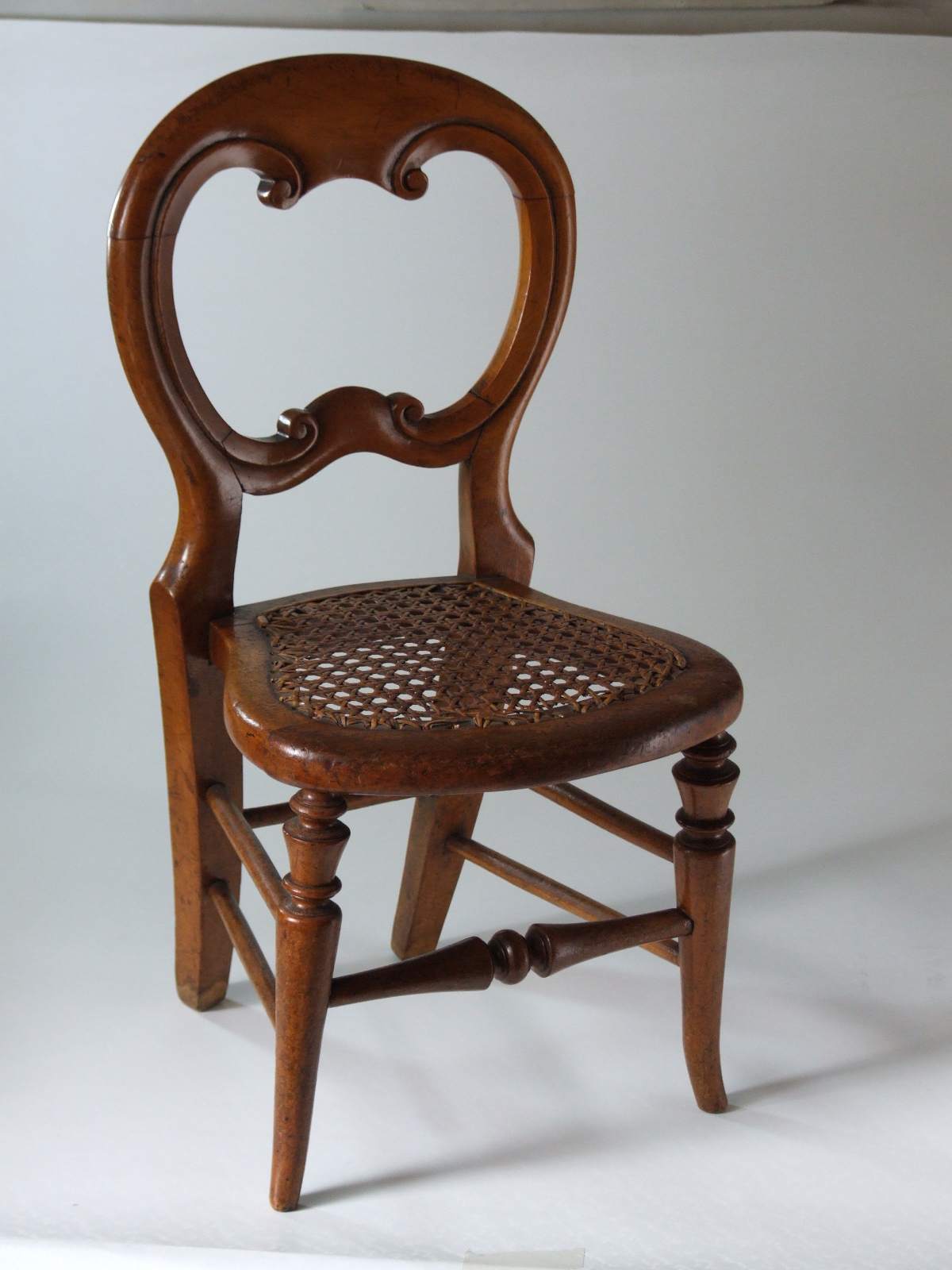
Chair of the month for May is this salesman’s miniature chair. It was made in about 1865, probably by Glenister’s. It is quarter sized, about 42 cm high.
Victorian chair salesmen often took miniature chairs like this with them on their journeys. They set out with wagon loads of furniture to sell and miniature chairs to show what else could be ordered. After about 1870, when printed pictures of chairs were used instead, the small chairs were not usually thought to be worth keeping. This one was rescued from a bonfire, and eventually given to Wycombe Museum.
You can see this chair and find out more about how chairs were marketed in our temporary exhibition ‘The Art of the Chair’ until 2 Feb 2025.
Chair of the Month is a partnership between Wycombe Museum and the Regional Furniture Society.
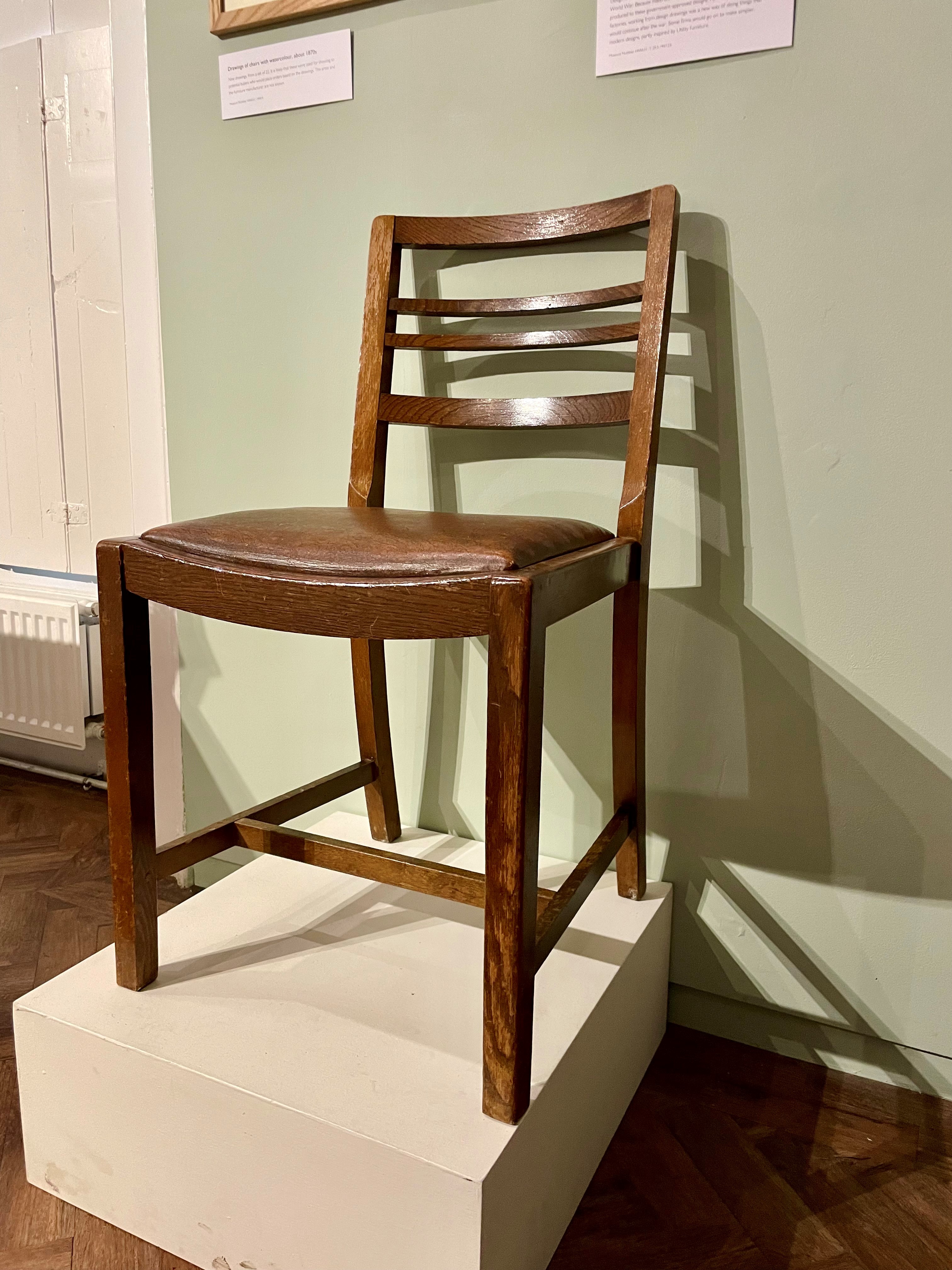
Chair of the month for April is a World War 2 Utility chair. It was made by E Gomme of High Wycombe under the World War 2 furniture rationing known as Utility. Between 1942 and 1952, only designs agreed by the government Board of Trade could be made. These designs made the most of limited raw materials.
Two local furniture makers were on the board that designed Utility furniture – Herbert Cutler of High Wycombe Technical College, and Edwin Clinch of Wycombe furniture factory, Goodearl Brothers.
After the War, E Gomme would go on to launch G-Plan furniture.
You can see this chair and find out more about chair design and marketing in Wycombe Museum’s exhibition, ‘The Art of the Chair’ until 2 Feb 2025.
Chair of the Month is a partnership between Wycombe Museum and the Regional Furniture Society.
A unique expression of the Arts & Crafts movement .
In 1899 Frank and Florence Dickinson got engaged and began designing their home in leafy Surrey. It was a long engagement since Frank was unprepared to marry until he had built their dream home. He left school at the age of 13 and worked for most of his life as a draftsman for Doultons Pottery in Lambeth. When he met Florence, he was living in crowded accommodation with his family in Paddington. He became a follower of William Morris and John Ruskin and the house was created to reflect their ideals.
Frank studied books on construction and borrowing £300 built Little Holland House himself with the help of his brother and a friend. He went to night school to learn metalwork and furniture making. Florence was a talented embroiderer and seamstress. Virtually everything in the house was made by one or other of them over a period of sixty years. They raised a family at Little Holland House, Frank encouraging his son in furniture making. Their well-crafted pieces show the influence of Charles Voysey. The house remains exactly as it was left on the death of Frank in 1971 and the departure of Florence a year later, when it was bought by Sutton Council and opened to the public.
To join this visit please book on-line: sutton.events.mylibrary.digital or dial Sutton Library: 020 8770 4740. Visits are available for limited numbers at half-hour intervals 11-17:00. Some members are booked for 11:00, so I suggest aiming for a similar time . If you do book please contact Jeremy Bate, events organiser so that he has an idea of who will be visiting.
Little Holland House , 40 Beeches Avenue Carshalton, Surrey. There is free parking on the road and the house is a 5 minute walk from Carshalton Beeches station ( 44 minutes from Victoria )
This month’s chair has been selected by the Museum’s new Assistant Curator who is working on an exciting project to make the collection artefacts in our stores easier to visit, study and enjoy. We’ll keep you updated with more news on this over the coming weeks…
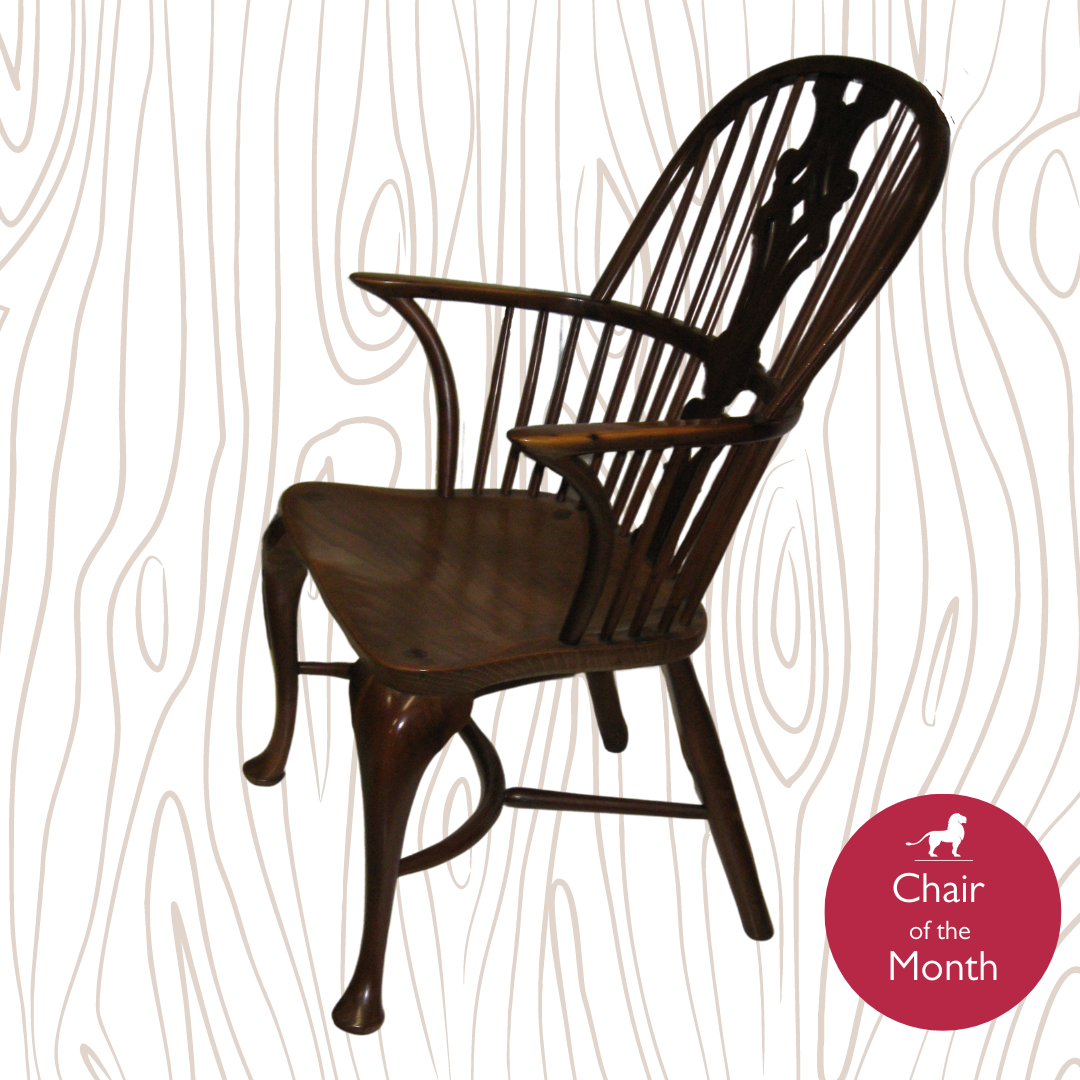
In the meantime, Chair of the Month for March is one of around 300 chairs we have in storage. It is a bow back Windsor armchair with a pierced central splat (the bit in the middle of the seat back). It was made by Jack Goodchild in around 1946. Jack initially trained as a bottomer (the person who makes the chair seat) but later changed to making whole chairs at his workshop in Naphill. He was one of the last local chair craftsmen and died in 1950.
You can find more photos of Jack and his work on the SWOP website. https://swop.org.uk/
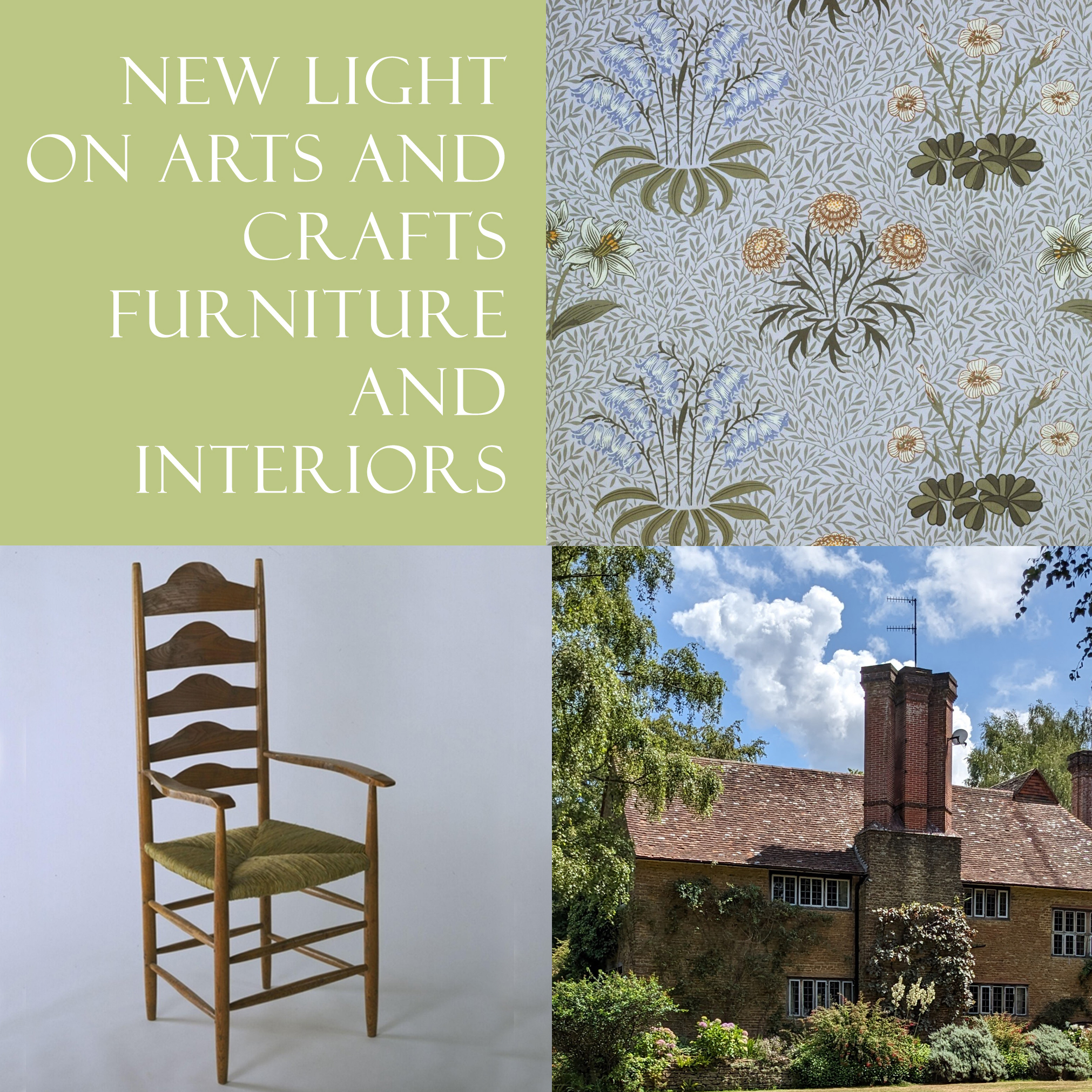
Picture credits: Chair designed by Ernest Gimson after 1888, V&A Circ.232-1960; Munstead Wood, designed by Edwin Lutyens for Gertrude Jekyll, 1896; Lily wallpaper designed by William Morris 1873, V&A E.484-1919.
THE 48TH ANNUAL SYMPOSIUM OF THE FURNITURE HISTORY SOCIETY
Art Workers’ Guild, 6 Queen Square, London WC1N 3AT
Saturday 23 March 2024, in person or live-streamed via Zoom. 10.30 am – 5.00 pm.
In person registration from 10.00 am
‘New Light on Arts and Crafts Furniture and Interiors’
The 2024 annual symposium will focus on Arts and Crafts furniture and interiors between about 1880 and 1920, including new research into the iconic British interiors Kelmscott Manor and Emery Walker’s House, with their rich and complex mix of furnishings, and the National Trust’s new acquisition, Gertrude Jekyll’s house Munstead Wood. In the second sessions speakers will present fresh information on individual designers and makers, on the transmission of design traditions and the influence of published photographs. The day will feature papers from an eminent panel of curators, scholars and furniture makers.
PROGRAMME
10.00-10.30am Registration and coffee/tea
10.30-10.35am Welcome by Christopher Rowell, FHS Chairman
10.35-10.40am Introduction by chair of morning: Tessa Wild – Designers and Interiors
10.40–11.05am Evidential Choreography: Recomposing the interiors at Kelmscott Manor
Dr Kathy Haslam FSA, Curator, Kelmscott Manor
11.05–11.30am Emery Walker’s House: The London Arts & Crafts Home
Mallory Horrill, Senior Curator at Emery Walker’s House, Curator of Collections & Exhibitions at the William Morris Society
11.30–11.40am Short Break
11.40am–12.05pm Gertrude Jekyll at Munstead Wood: the home of the ‘artist-gardener’
Dr Caroline Ikin, Curator, National Trust, Munstead Wood
12.05–12.30pm Evolution, not revolution. Interpreting Ernest Gimson’s designs through the generations
The Marchmont Workshop: Richard Platt & Sam Cooper, Furniture Makers
12.30–12.45pm Q & A
12.45–2.00pm LUNCH – for attendees who have booked in the Master’s Room at the Art Workers’ Guild. Otherwise various cafes/restaurants nearby.
2.00–2.05pm Introduction by chair of afternoon: Martin Levy – Designers and Makers
2.05–2.25pm TheEarly Years of the Art Workers’ Guild
Peyton Skipwith, Fine art consultant and author
2. 25–2.45pm BIFMO and the Arts & Crafts Exhibition Society Catalogues, 1888-1916
Clarissa Ward, BIFMO 19th/early 20th Century Editor & Jo Buckrell, BIFMO Research Assistant and Researcher, Haslemere Educational Museum
2.45–3.10pm A Question of Attribution: the contemporaneous appropriation of architect designed Arts & Crafts furniture.
Tony Peart, Senior Lecturer in Illustration at the University of Cumbria
3.10–3.25pm SHORT BREAK
3.25–3.50pm Augustus H. Mason: ‘Cabinet Maker, chiefly special designs’
Annette Carruthers, Honorary Senior Lecturer, University of St Andrews
3.50–4.15pm ‘Garden of Hearts: A Case Study of an American Arts and Crafts Masterpiece’
Daniel S. Sousa, Assistant Curator, Historic Deerfield, Massachusetts, USA
Special Collections at University of Leeds Libraries & Leeds Museums & Galleries
CALL FOR PAPERS
What is Furniture History?
Thursday 6th June – Friday 7th June 2024
University of Leeds (& online)
Henry Lawford The cabinet of practical, useful and decorative furniture designs (1855). Image copyright, the University of Leeds Libraries
The history of furniture remains one of the dominant areas of interest within the history of the so-called ‘Decorative Arts’. Since it emerged in the 19th century, scholarship focused on furniture history has expanded far beyond the interests of its earlier pioneers, transforming furniture history as a discipline. This 2-day symposium, developed as part of the exhibition ‘Part of the Furniture: The Library of John Bedford’ (Treasures of the Brotherton Gallery, University of Leeds, 9th January-21st December 2024), and in collaboration with Temple Newsam, Leeds, seeks to explore furniture history as a subject and to reflect on what furniture history of the future might look like.
We invite submissions for papers on themes related to the history of furniture, focused on any period, any geography, from scholars, museum professionals, collectors, dealers, and furniture makers. We invite papers through any lens, including methodological papers on furniture history as method/approach, case studies on objects and collections, papers on furniture historians, as well as work-in-progress papers on possible futures for furniture history.
Contributions might address (not exhaustive):
The history of furniture history
Furniture historians
Publications of furniture history
The sources and materials of furniture history
Furniture collections in museum/historic houses
Collectors and collecting furniture
Studies of individual examples of furniture
Studies of types of furniture
Furniture dealers; the market for furniture
Societies and communities of furniture enthusiasts
The themes of furniture history (style, biography, material, geography etc)
Furniture history of the future
Papers should be 20 minutes in length; participation can be in-person or online (Microsoft TEAMS).
The symposium programme will include facilitated tours at Temple Newsam (part of Leeds Museums & Galleries) to explore the world class furniture collections at the house. As well as an opportunity to see extra materials from the collection of John Bedford at the University.
DEADLINE for submission for proposals (c.200 words) is – MONDAY 15th April 2024 to (m.w.westgarth@leeds.ac.uk). Successful speakers will be notified by FRIDAY 26th April 2024.
Speakers – Free
Conference delegates (in person) £25 per person (2 days) £15 per person (1 day), includes refreshments and lunch and transport to Temple Newsam. Online delegates – Free.
NB: The RFS is pleased to support the costs of attending the What is Furniture History conference in person, for five early career professionals in the field or students (part- or full-time). This special event bursary will cover the ticket fee (£25 two days/£15 one day) and UK travel costs (standard class rail or reasonable alternative) but not overnight accommodation. The bursary is open to existing or new RFS members. Non-members, please note: RFS annual membership costs only £28 by banker’s order (£20 for students) and includes numerous benefits, almost certainly much less than the cost of attending the conference without a bursary, so this may be a perfect opportunity to join the RFS.
Applicants should email the Grants and Bursaries Secretary Nick Humphrey nickhu@vam.ac.uk providing details of your early career professional post or course of study, and the attendance and travel costs you wish to claim. Successful applicants will be required to provide receipts for reimbursement. Applications will be dealt with on a First Come, First Served basis.
The Frederick Parker Collection is a unique and outstanding educational resource spanning over 300 years of British furniture making and design, from 1660 to the present day. The Collection comprises over 200 chairs, together with an archive of related historical documents and artefacts and became part of the Furniture Makers’ Company in 2013.
We are delighted that we have two exceptional speakers for the Annual Lectures this year:
Joseph Bray – “Sylva Wood School: bridging the gap between education and practice”
Joe leads the Sylva Foundation’s Wood School and describes himself as a designer, maker and teacher. He is passionate about inspiring and supporting people to become skilled craftspeople and furniture makers. He has been directly involved in the furniture industry for the past 25 years.
After completing a BA(Hons) and MA in Furniture Design he worked as a bespoke furniture designer, maker and production coordinator, before returning to educate the next generation of furniture designers and craftspeople at Rycotewood in Oxford. He strives to develop partnerships and collaborations leading to live projects, study trips, work experience, internships and sponsorship for students.
Joe is a Churchill Fellow, in 2018/2019 he travelled to Denmark, Ireland, Norway, Sweden and the USA, to explore the future of furniture craft education. The experience was enlightening, providing the inspiration for the creation of Sylva Foundation’s workshops and development of their unique courses.
His talk will chart the development of a unique approach to teaching furniture making skills, inspired by his 14 years teaching at Rycotewood and his fellowship travels. He will then share his work to establish a programme to improve diversity across the sector
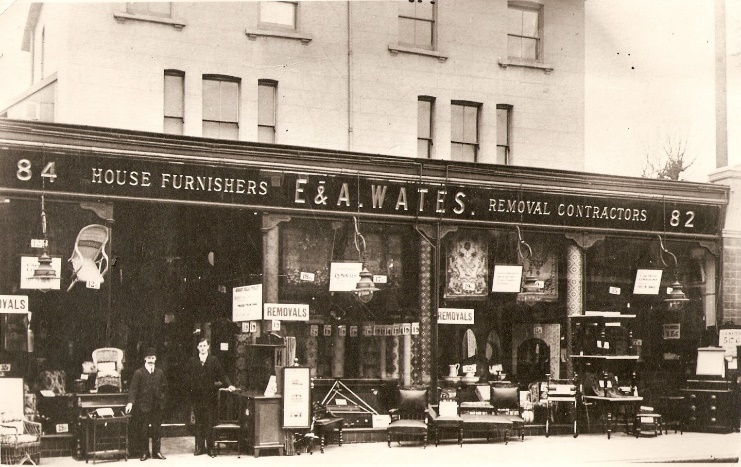
Roger Wates – “E & A Wates – a furnisher in south London 1900-2021”
Roger’s degree was in accountancy and business law at Stirling University but he spent his career in the retail sector. Cutting his teeth with Marks & Spencer in stores around the country he then worked in Peru before joining his family business E & A Wates in 1985 which comprised three stores in South London. In a career that challenged every facet of his character, he became joint MD in 1990 and loved the all-encompassing nature of the work.
Long standing businesses tend to have a wide breadth of services and E & A Wates, which was established in1900, embraced selling furniture, undertaking removals and storage, commercial and domestic furniture restoration and interior design.
Roger balanced the wonderful restoration work with the drive to purchase and create inspiring displays of new furniture. The company was at the heart of the Streatham community with many local clients and ran workshop tours, public talks and shows alongside fascinating commercial projects in London and overseas.
Roger ran his family furnishing business for 36 years until it closed in 2021. He will talk about the origins and growth of the company, his father’s talent, the personalities involved, its building connections, and the influence of war. Roger will also examine its interesting client base and highlight the skilled work undertaken by the company’s craftspeople.
* * *
The lectures will be followed by a sparkling wine reception. We hope you will also wish to stay for the annual dinner (see booking form), which is always a popular and enjoyable occasion and an excellent opportunity to meet other supporters of the Frederick Parker Collection. Places are limited so please reply as soon as possible using the attached application form. All proceeds from the evening will go to support the Collection and its development as an educational resource for aspiring furniture designers.
If you are interested the application form is here.





You must be logged in to post a comment.