Unknown's avatar

Newsletter Index Update

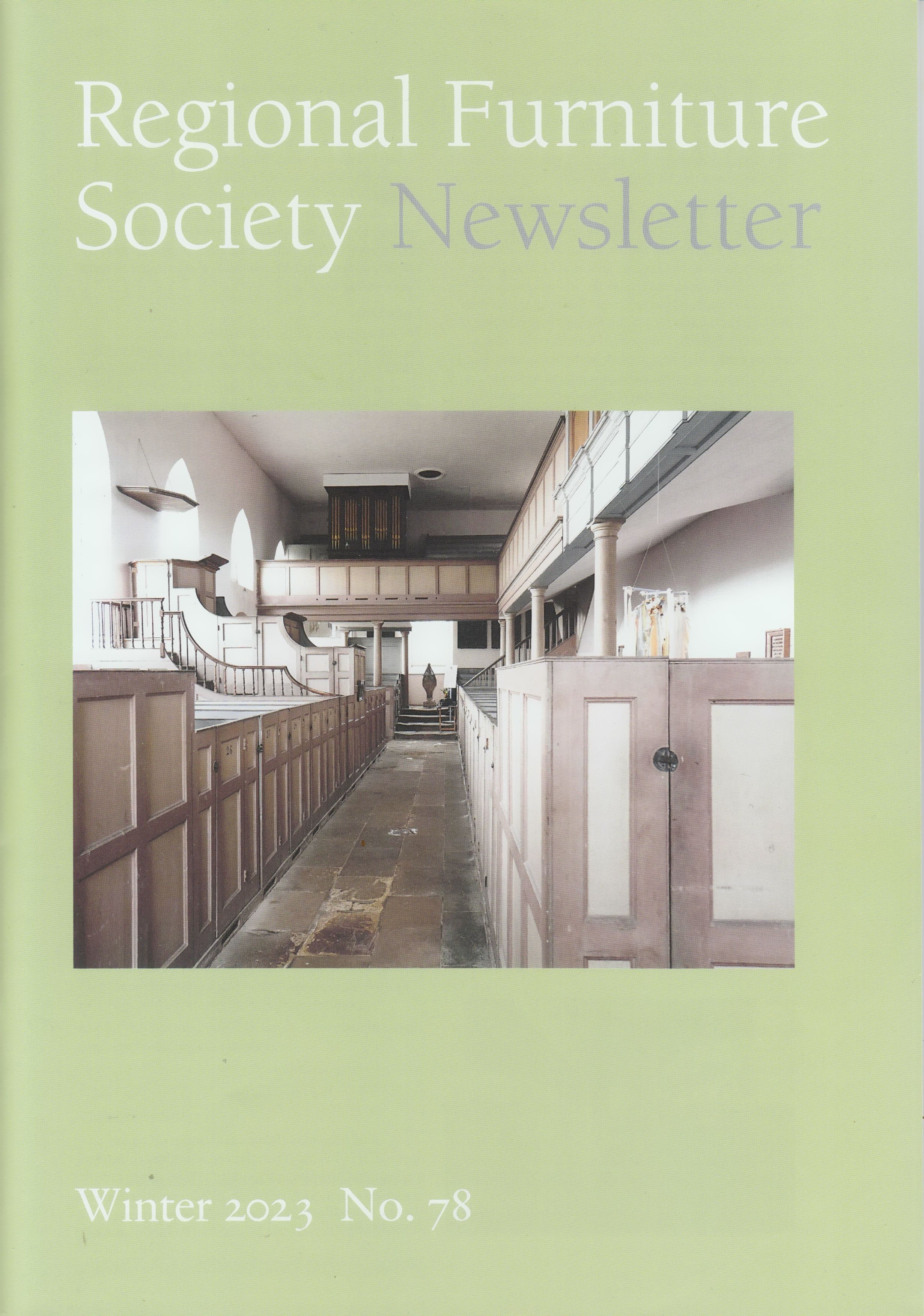
Following the publication of the most recent RFS Newsletter, number 78, I have updated the indexes to the Newsletter Research Articles, the Book Reviews and the Obituaries to include NL 78. I have also published 25 newsletter pieces, and 2 short notices from RFS Newsletter 72, (Spring 2020) on the relevant pages of the website. A spreadsheet containing the latest index to all parts may be downloaded here.

Julian Parker, Website Editor

21 January 2023

Unknown's avatar

Chair of the Month for January is a wheelchair with a beech frame and caned seat and back, made in High Wycombe c. 1870

January’s Chair of the Month is a wheelchair with a beech frame and caned seat and back, made in High Wycombe in about the 1870s. It is not known which of the many local factories made this chair, but Glenisters certainly made caned wheelchairs and other local makers probably made similar chairs too.  J Mole of High Wycombe specialised in what they called ‘invalid chairs’, from 1918 until their closure in 1935. 

J Mole’s decision to specialise in furniture for disabled people might have been a response to an increased demand due to injuries in World War 1. In the years following World War 2, the Paralympics were established in Stoke Mandeville, Buckinghamshire. The games were initially for injured service men and women. 

Wycombe Museum is exploring the local Paralympic story in Buckinghamshire in collaboration with local young people with disabilities, supported by a Together We Build grant from Bucks Culture. Together We Build is a partnership project centred on the story of the Paralympics.  

Chair of the Month is a partnership between Wycombe Museum wycombemuseum.org.uk and the Regional Furniture Society regionalfurnituresociety.org

Unknown's avatar

Chair of the Month for December is a modern Windsor by Ercol of High Wycombe

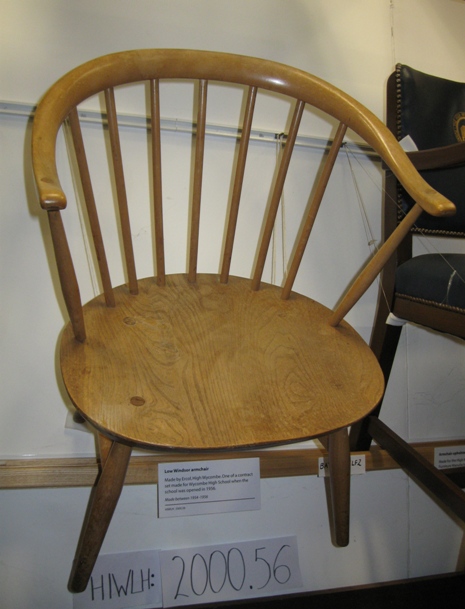
December’s Chair of the Month is a modern Windsor by Ercol of High Wycombe. It was made as part of a contract for Wycombe High School when the school moved to the Marlow Hill site in 1956 . The design is part of Ercol’s Windsor Range, launched in 1950. Company founder Luciano Ercolani designed the range, collaborating with draughtmen, craftsmen and engineers, ensuring that each design was practical to produce in the factory. Like the traditional Windsor chairs that inspired the design, this Ercol Windsor is made from elm, beech and ash. 

Ercol were established in High Wycombe by Ercolani in 1920, initially as Furniture Industries Ltd, becoming Ercol in 1928. Ercol moved to the new Princes Risborough site in 2002.

This chair can be seen in the factory area of the chair galleries at Wycombe Museum. 

Chair of the Month is a partnership between Wycombe Museum wycombemuseum.org.uk and the Regional Furniture Society regionalfurnituresociety.org.

For your chance to win a set of Ercol nesting tables and other wonderful prizes donated by local businesses see Christmas Raffle Ticket | Wycombe Museum Official Site

Unknown's avatar

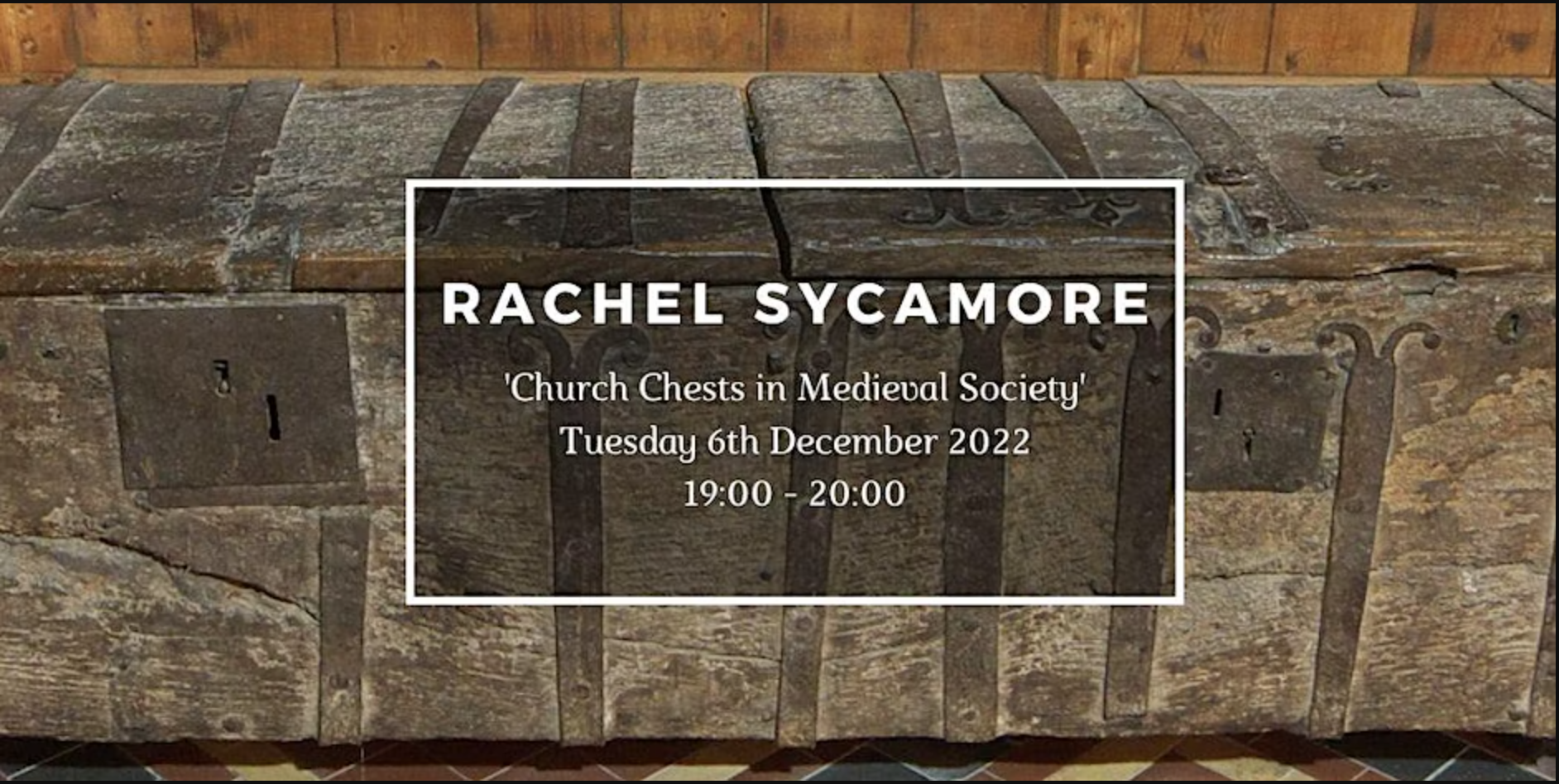
Society for Church Archaeology – Lecture: Rachel Sycamore – ‘Church Chests in Medieval Society’ – Tuesday 6 December 2022 19:00 – 20:00

Members may be interested in this forthcoming lecture by Rachael Sycamore.

The lecture is free. You may reserve a spot here.

Rachel Sycamore, a furniture maker and restorer since 1995, now specialises in furniture restoration and conservation. In 2021, she completed a Masters by Research in Archaeology at the University of Worcester, researching medieval dug-out church chests in Herefordshire and Worcestershire. Since then, she continues to record, research and conserve church chests around England.

Chests were amongst the most important and prevalent form of medieval furniture, with many surviving in parish churches today. Originally, they provided secure containers in which to store valuable church accoutrements. As part of her master’s degree, Rachel Sycamore recorded and photographed over 200 church chests throughout Herefordshire and Worcestershire. Her talk will explain the different types of church chest and discuss their construction, uses, ornament and care. She will reveal why they are significant archaeological artefacts and what they meant to the people who used and depended on them. She will also recount some of the extraordinary and amusing tales of their survival and her quests to record examples in unlikely places. As a furniture restorer and conservator, Rachel hopes to raise awareness of the importance and significance of church chests and ensure that they are cared for in a way that will preserve them for future generations.

Unknown's avatar

Conference – New Insights into C16th and C17th British Architecture – Saturday 21 January 2023 at the Society of Antiquaries

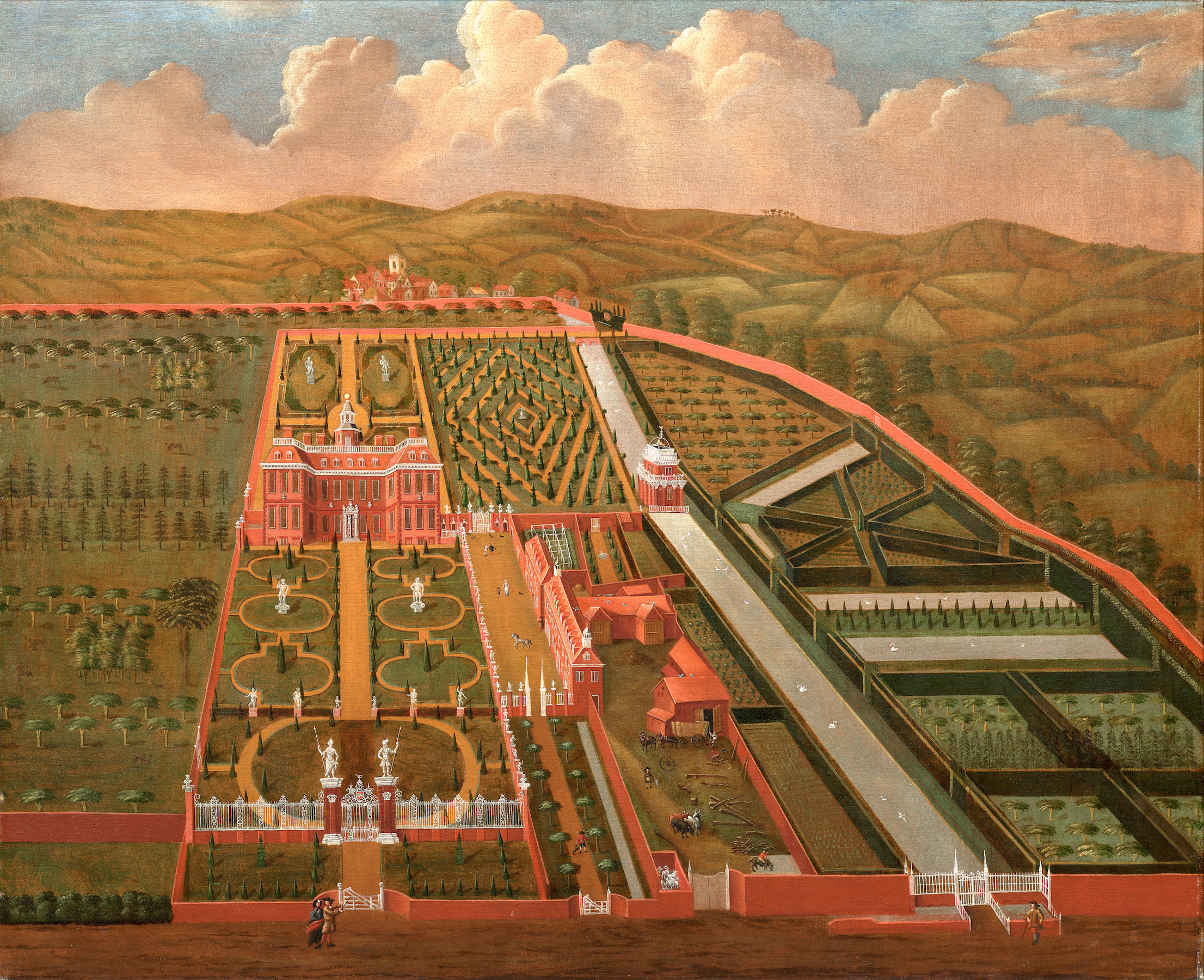
Unknown artist, Denham Place, Buckinghamshire, about 1695, oil on canvas, Yale Center for British Art, Paul Mellon Collection

Members’ attention is drawn to the programme for the next New Insights into C16th and C17th British Architecture Conference which will take place on Saturday 21 January 2023 at the Society of Antiquaries, London, which may be of interest. There are a few remaining tickets left.

Tickets are £56.00 including coffee, lunch and tea, and booking is via Eventbrite. Full details are also available on the website.

Programme:

10:00 Introduction and welcome

Reconstructions

10:15-10:45Alice Blows: ‘One of those capacious and splendid mansions’: a reassessment of Mells Manor, Somerset
10:45-11:15Nick Humphrey: ‘Assai Comodo Palazzo’ (‘A Very Commodious Mansion House’): Sir Paul Pindar’s House on Bishopsgate
11:15-11:30
11:30-12:00
Questions and discussion

Morning refreshment

Architectural Traces

12:00-12:30
12:30-13:00
13:00-13:15
13:15-14:00
Dr Patrick Kragelund: A Royal Visit to Stuart England in 1606
Rose Mitchell: Mystery Plans Investigated
Questions and discussion
Lunch

Constructing Identities

14:00-14:30Rebecca Shields: On Her Own Terms: Hatton House and the Architectural Matronage of Elizabeth Hatton
14:30-15:00Melanie Holcomb: House of Commerce or Urban Folly?: Henry Hamlin’s House in Tudor Exeter
15:00-15:15
15:15-15:45
Questions and discussion

Afternoon refreshment

Recovering Lost Buildings

15:45-16:15
16:15-16:45
Struan Bates: Who Built Hampstead Marshall (1662-1718)?

Dr Ann-Marie Akehurst: Pepys’ Stone Feast and the Cutting Ward at St Bartholomew’s Hospital, 1691
16:45-17:00
17:00
Questions and discussion

Conference closes

The conference is organised by Dr Olivia Horsfall Turner and Dr Jenny Saunt

Unknown's avatar

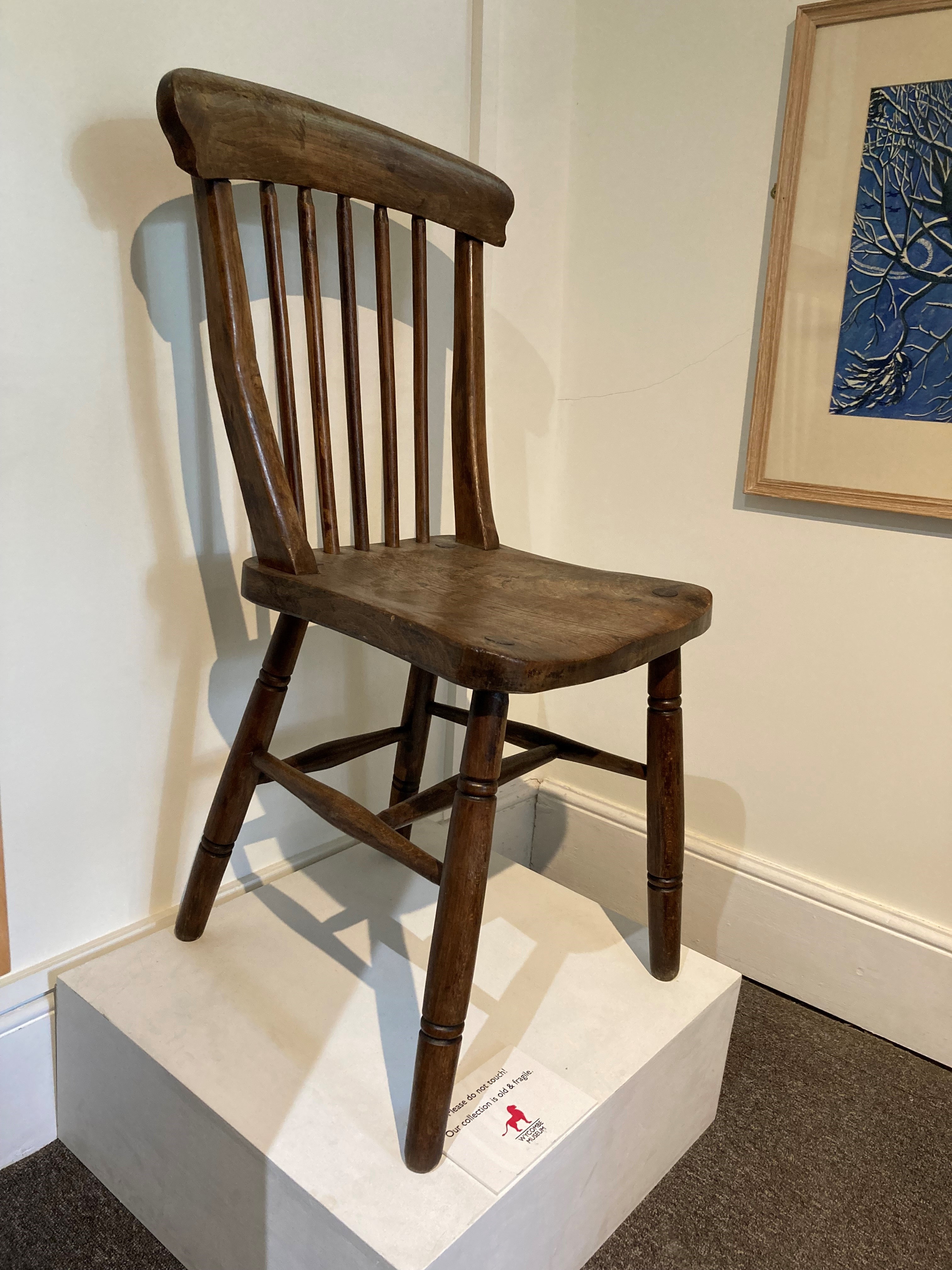
Chair of the Month for November is a First World War stick back Windsor with elm seat and beech legs. Made by Elliott and Son of High Wycombe in 1917

The back of the seat is stamped ELLIOT AND SONS/ A.W.F. / E.S/ 1917 / G.R.V. chairs. It can be seen in the ‘A History of Wycombe in 10 Objects’ display at Wycombe Museum.

During World War 1, High Wycombe furniture factories diversified to make all kinds of wooden items for the military including tent pegs and wooden aircraft parts such as propellors. They also made furniture for the military, including this chair. Similar stamped chairs in Lincoln Cathedral are believed to have come from a military hospital. Elliott’s Factory ran from 1887-1978 and had premises in Shaftsbury Street and Desborough Road. 

Chair of the Month is a partnership between Wycombe Museum wycombemuseum.org.uk and the Regional Furniture Society regional furnituresociety.org

Further information ‘Hybrid Windsors for Military Use: An Adaptation by James Eliott & Sons, High Wycombe’ by Sarah Medlam, Regional Furniture, 2020

Unknown's avatar

RFS/MESDA Webinar via Zoom: Backcountry not Backwards: Working Wood in the Inland American South – Daniel Ackermann Monday 14 November 2022, 7 p.m. UK, 2 p.m. EDT.

RFS Members are invited to an RFS/MESDA joint webinar via Zoom.

Join Daniel Ackermann, chief curator of the Museum of Early Southern Decorative Arts, live from the museum’s galleries in North Carolina as he talks about “Backcountry not Backwards: Working Wood in the Inland American South.”

Along America’s Atlantic coast European-born cabinetmakers often hewed close to their training as they competed with British-made imports.  However, further inland, cabinetmakers created distinctive regional styles that reflected their diversity and that of their patrons. Often referred to in America as the “Backcountry,” the furniture made in the inland south was far from backwards. 

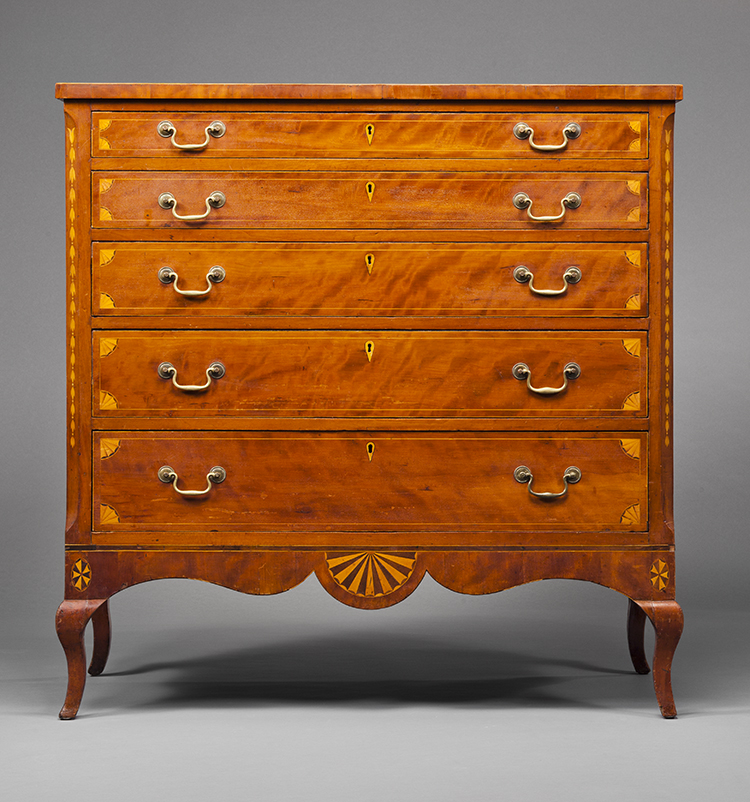
Images (L-R): Chest of Drawers, Workshop of Gerrard Calvert, Mason County, Kentucky. 1795-1800 Cherry, light and dark wood inlays, poplar HOA: 42 3/8”; WOA: 41 ¾”; DOA: 21 3/8” The Museum of Early Southern Decorative Arts at Old Salem Museums & Gardens MESDA Purchase Fund (5691.1) 

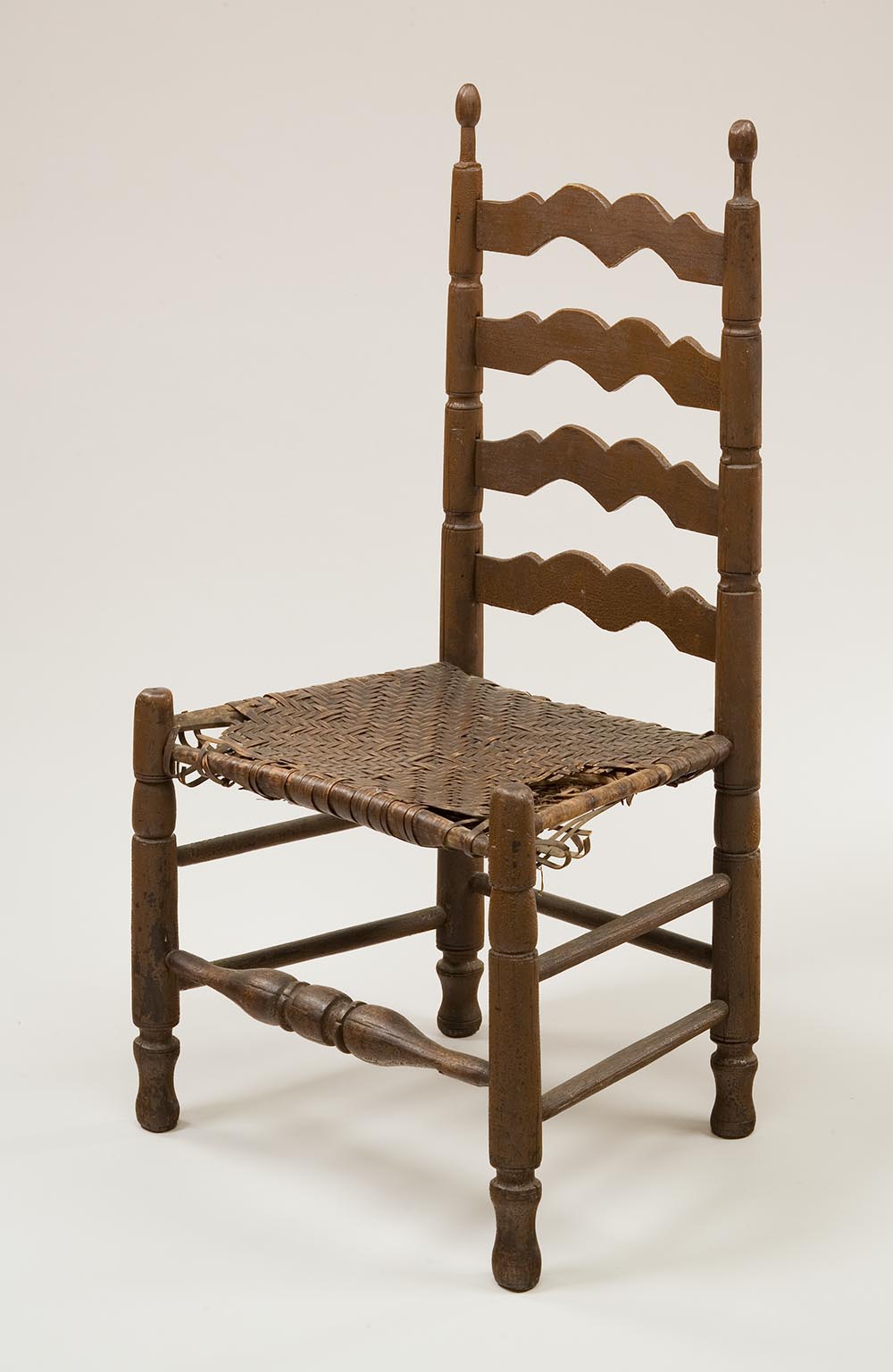
Ladder-back Side Chair, Walton County, Georgia.  1790-1820 Maple and split oat HOA: 36”; WOA: 18”; DOA: 14” The Museum of Early Southern Decorative Arts at Old Salem Museums & Gardens MESDA Purchase Fund (5560) 

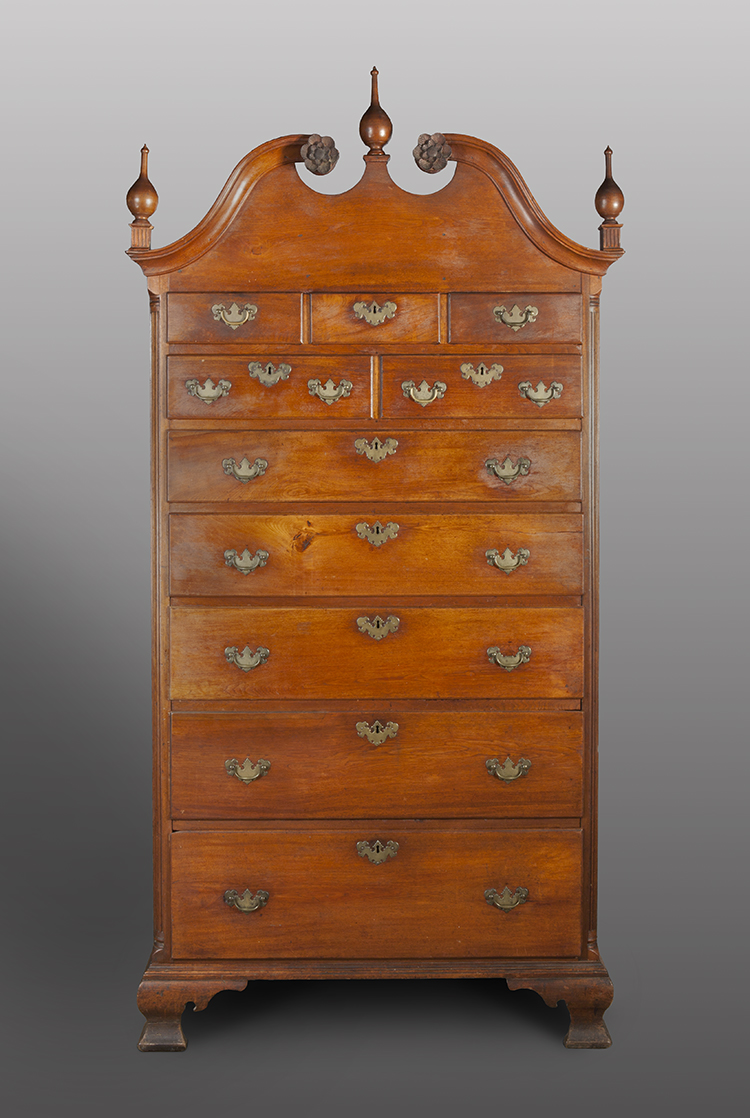
High Chest of Drawers, Joseph Ray and John Price, Augusta County, Virginia. 1765-1780 Walnut and yellow pine HOA: 90 1/2”; WOA: 44 1/2”; DOA: 24 1/2” Colonial Williamsburg Collection MESDA Purchase Fund (5749)

Members wishing to join the webinar can do so by emailing Jeremy Bate on events.rfs@gmail.com who will send you the Zoom invitation.

Unknown's avatar

Newsletter Index Update

Following the publication of the most recent RFS Newsletter, number 77, I have updated the indexes to the Newsletter Research Articles, the Book Reviews and the Obituaries to include NL 77. I have also published 39 newsletter pieces, 3 reviews and 2 obituaries from RFS Newsletter 71, (Autumn 2019) on the relevant pages of the website. A spreadsheet containing the latest index to all parts may be downloaded here.

Julian Parker, Website Editor

15 October 2022