With a ‘normal’ Conference being held in June in Somerset, we are able to return to holding an AGM ‘in person’. However, some members who were unable to attend Conference welcomed the use of Zoom AGMs, and so we plan to arrange for those wishing to attend via Zoom to be able to do so also. This will depend on the Ibis Hotel Bridgwater’s equipment functioning properly.
The Annual General Meeting of the Regional Furniture Society will be held at the Ibis Hotel, Bridgwater and by Zoom at 9:30 p.m. on Sunday 26 June.
Members who wish to take part in the AGM via Zoom should email the Secretary on: justj2r2@gmail.com The Secretary will then forward to those members the access code for the Zoom meeting and the Agenda and the Minutes of the last AGM, the proposed amendments to the Constitution and the Annual Report & Accounts for 2021. This will be done a week before the meeting. The Annual Report and Accounts for 2021 are also available on the website; any member requiring a paper version should send an A4 self-addressed envelope to the Secretary, requesting a copy.
In October 2021 the RFS Council approved a project whereby the back numbers of the Newsletters (which contain much interesting material by way of research pieces, visit/event reports, book reviews, notices of publication, members’ correspondence and obituaries) should be reviewed, scanned and made available online. I am grateful to John Boram and Diana Halliwell for providing me with a complete collection of all Newsletters since 1985 (including the publications of the Regional Furniture Study Group which pre-dated the setting up of the Society).
The material will in future be published (as is the Society’s practice for the articles in the Journal), following a three year delay after print publication. The back archive between 1985 and Spring 2022 amounts to more than 900 research pieces and visit/event reports, about 100 book reviews and another 50-odd notices of publication and, alas, 43 obituaries. That amounts just under 1100 items, all of which have been indexed and scanned, of which around 920 are published today. The remaining 170-odd from the last 6 issues (Newsletters 71 to 76 inclusive) will be published in due course after the three year delay.
The research pieces and visit/event reports may be found here; the book reviews here; and the obituaries here.
I have prepared hyperlinked Excel spreadsheet indexes for all three categories which may be downloaded from links found on those pages. The Excel spreadsheets may be easier to navigate, particularly for the 900+ research pieces and visit/event reports. I have also prepared an Excel spreadsheet index for all the 320-odd articles which have been published in the Journal which may be found on a link on the Journal back issues page. All of these downloadable spreadsheets have links directly to the website. If you would like all 4 indexes in one spreadsheet, it is here. It is my intention to update these indexes every six months for the Newsletters and each year for the Journal.
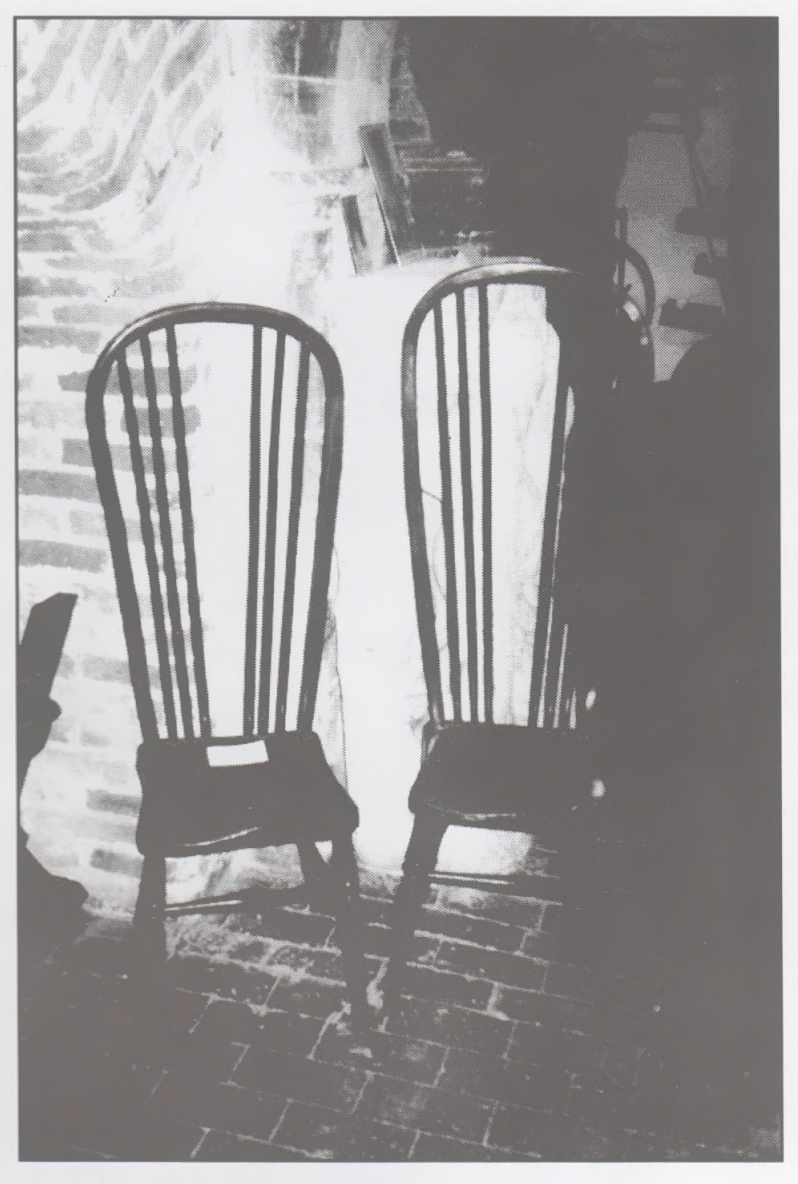
My favourite item discovered during the scanning project? A pair of ophthalmic Windsor chairs, from West Suffolk Hospital, into the central sticks of which the patient’s head was wedged whilst the eye examination took place!
From Lionel Reynold’s note in NL 16 in 1992
Happy hunting!
Julian Parker, Website Editor, 18 April 2022
P.S. Some of the originals have copy that is slightly smudged. Sometimes the paper is highly reflective. I hope all of the scans are legible but I am aware that some are less than perfect.
Members may be interested to know of the forthcoming two-day conference ‘Grinling Gibbons and the Story of Carving’ which will be held on Friday 24 and Saturday 25 June 2022. Details for booking may be found on the V&A website where a link to the draft programme may also be found.
Speakers currently scheduled include: Ada de Wit ,Curator of Works of Art and Sculpture at the Wallace Collection, London; David Luard of Luard Conservation; Alan Lamb, formerly of City and Guilds of London Art School, and Head of the Historic Carving Department; Dr Frances Sands, Curator of Drawings and Books at Sir John Soane’s Museum, London; Dr Gordon Higgott, independent architectural historian; Dr Kira d’Alburquerque, Curator of Sculpture at the Victoria and Albert Museum; Dr Lee Prosser, curator – historic buildings at Historic Royal Palaces; Nick Humphrey, Curator of the Furniture Collection at the Victoria and Albert Museum; Dr Jonathan Tavares, Curator, Applied Arts of Europe Department, Art Institute of Chicago; Lisa Ackerman, Associate Conservator, Art Institute of Chicago; Dr Tessa Murdoch FSA, independent scholar; Professor Lauren R. Cannady, University of Maryland; Wendy Frère, doctoral student, Université libre de Bruxelles (ULB)/Fondation Périer-D’Ieteren; Maria Cristina Gigli, Opificio delle Pietre Dure, Firenze; and Sandra Rossi, Director, Painting Department and Wooden Sculpture Department, Opificio delle Pietre Dure, Firenze.
RFS may be interested to learn that the National Museum of Ireland’s full collection of ‘Sligo’ chair or ‘Tuam’ chairs is on display for the first time. An online symposium has been organised at 2:30 p.m. on Saturday 19th February 2022. Participants include Claudia Kinmonth, Laura Mays, Stephen Jackson and David Jones.
More information about the symposium may be found here. More information about the exhibition (including a short video) may be found here. RFS members who wish to register free for the symposium must book via Eventbrite.
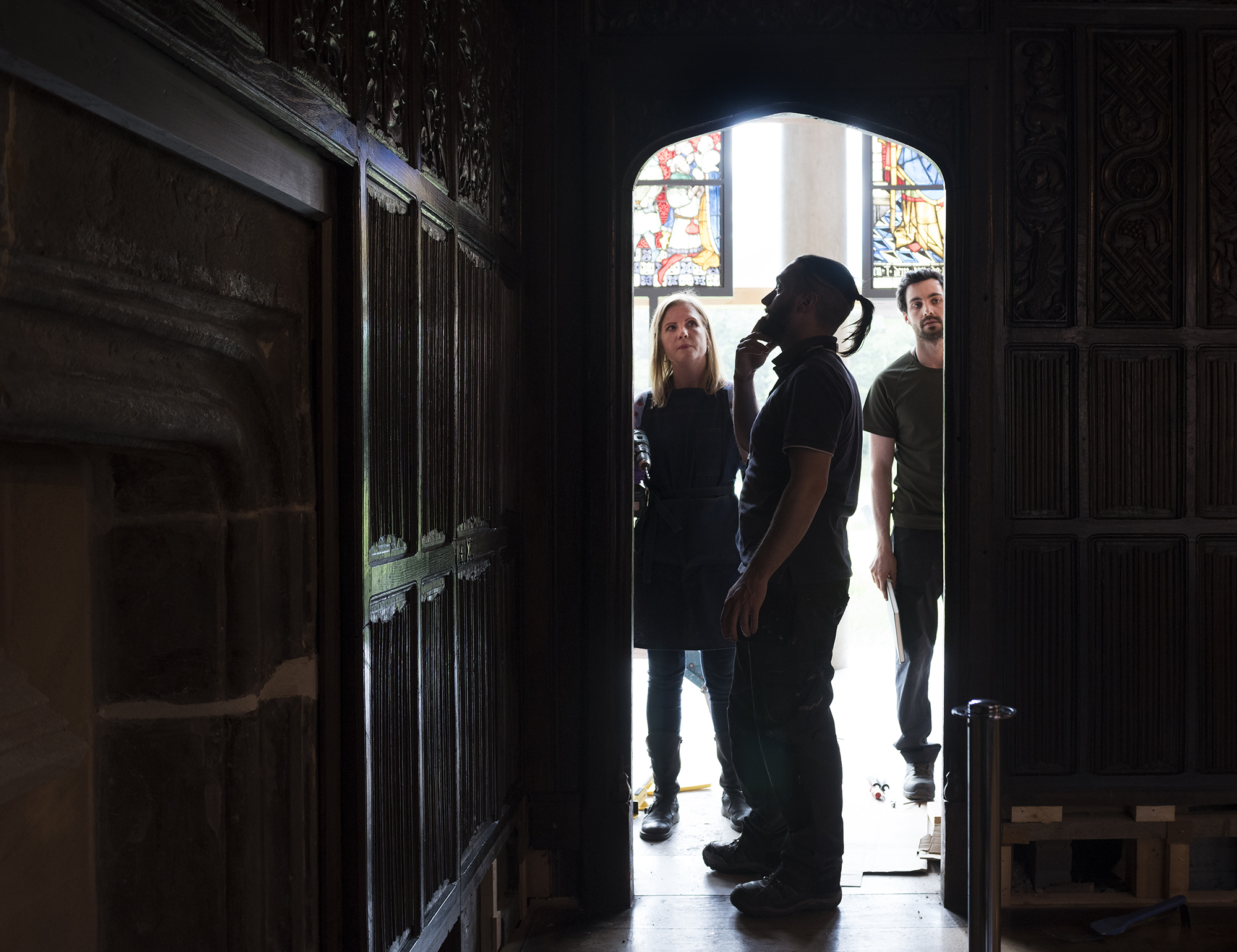
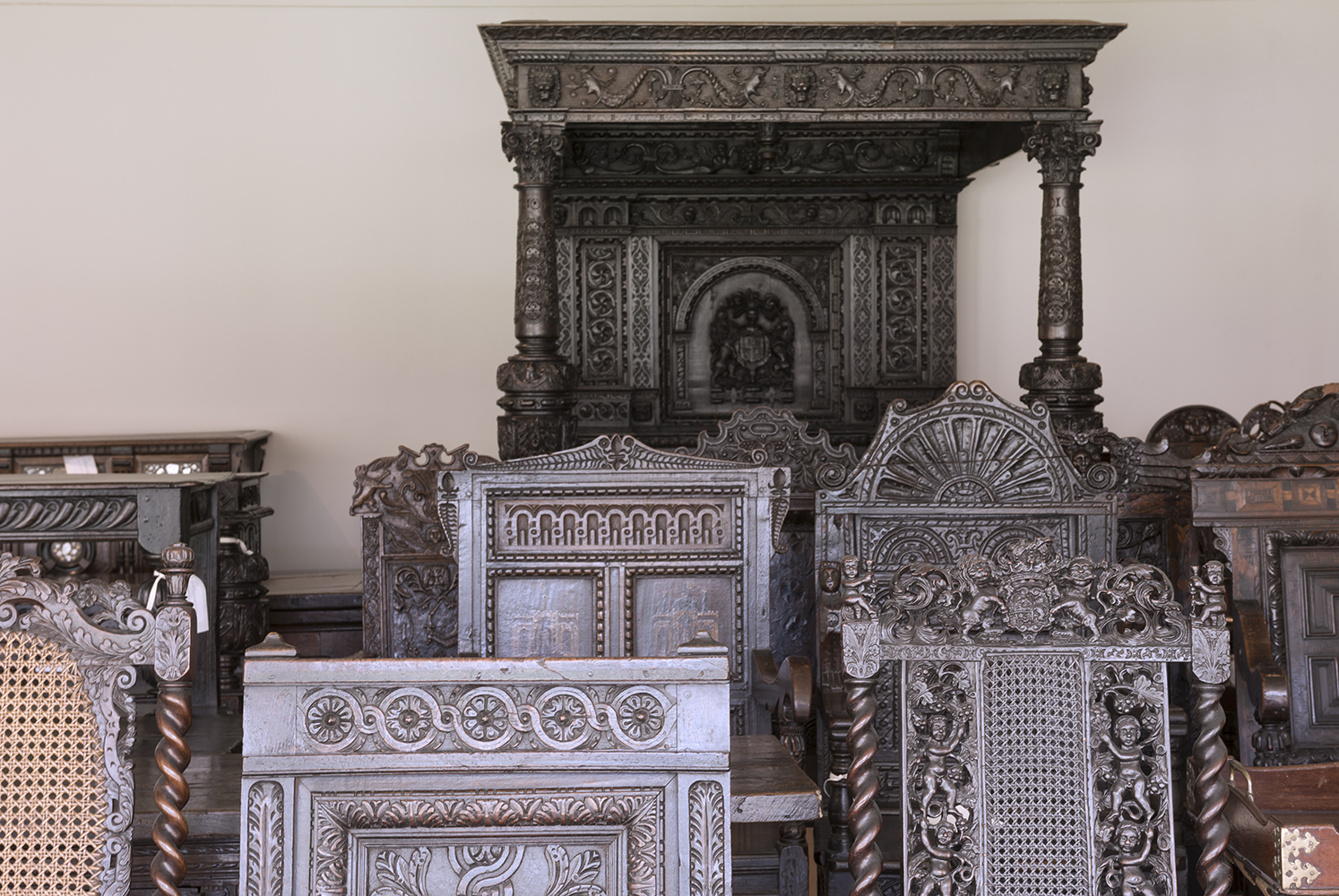
We are delighted to invite RFS members to a unique preview of the newly refurbished Burrell Collection, Glasgow, due to reopen this March having been closed for many years. The re-ordered museum will create a much-improved display and interpretation of the collection of over 500 furniture items donated in 1944 by Glaswegian shipping magnate and collector Sir William Burrell and his wife Constance. The collection includes English, Welsh, Scottish and continental pieces. Laura, Ed and Lindsay’s talk will offer a behind-the-scenes exploration of the Burrell by curators and conservators, revealing the new methods of interpretation developed for the displays of furniture within the galleries.
This event is for RFS members. To receive the link to the Zoom meeting, please apply to events.rfs@gmail.com by 16:00 Sunday 6th February. This event will not be available on YouTube for future viewing.
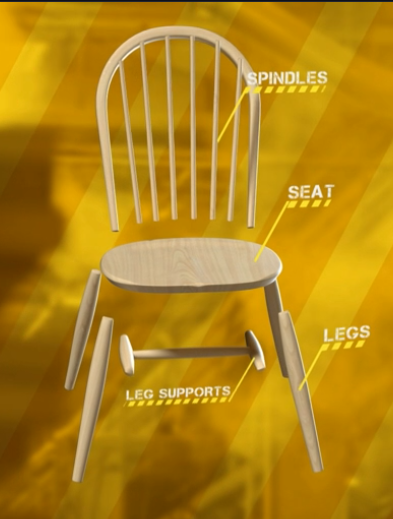
Please note that we are now fully subscribed for the Ercol factory visit but are able to offer places to those wishing to join us for lunch and at the Wycombe Chair Museum and an afternoon devoted to their collection. The fee is the same (£20) since Ercol are kindly not charging us.
Members may wish to know that a tour of the Ercol factory, in Princes Risborough, organised by Jeremy Bate, will be advertised in the forthcoming RFS Newsletter. The factory also features in the BBC’s ‘Inside the Factory’ on BBC2 tomorrow evening, Saturday 15 January 2022 at 6 p.m. So if you want a sneak preview, it’s available via the BBC iPlayer here.
Hans Piena, Conservator/Curator, Nederlands Openluchtmuseum (Holland Open Air Museum) 0:00 Introduction to the diary of Eimert Papenborg re-discovered 1969 and then 2013 1:13 Historical context – Beethoven; The Beagle; aftermath of Napoleon; England a world power 1:58 213 pages sometimes 3 times overwritten and parts in secret code and faded 2:29 8 years of research and deciphering leading to publication in 10 chapters ISBN:978-90-823607-5-2 3:19 Achterhoek region 3:44 local map of farm site near Zieuwent 4:29 Louis Apol c. 1880 Country Road 5:07 yearly floods; Drinking Cows Willem Roelofs 1884 5:39 Jan Holtrup c. 1940 Winter afternoon in the Achterhoek – low walled huts with rye straw roof 6:02 Oldest picture of the farm 6:22 Louis Apol Looking for wood 1873-75 in Winter 6:42 Papenborg’s oldest son and family – Catholic village in Protestant country – distinctive gold crosses worn by the women 7:33 pig meat and fat eaten never beef: cows were for butter 7:56 Herman Johannes van Der Weele 1852-1930 Ploughing with ox – oxen were the tractors 8:10 main crops potatoes and rye 8:31 8 old apple varieties 8:54 Papenborg fell in love with youngest daughter of richest local farmer 1851-52 – took nearly 9 years to get permission to marry 9:55 Albert Neuhuys 1844-1914 Changing diapers – interior of family house kettle over fire 10:28 Bernhardt Winter 1905-06 women flax processing, ladder back chairs 10:51 linen cabinet – linen was most valuable item in Papenborg’s inventory 11:46 H J ten Noever Bakker 1899 Pedlar with wicker back basket selling chickens and tobacco to woman who had the money 12:22 Otto van Tussenbroek 1905 Churning butter – thrice monthly market 5-8kg butter 18 km away – profitable for cash 13:16 House interior Hendrikus Johannes Melis 1860-1923 – 3 legged table, jointed stool, cradle, books, paintings, Bible 14:06 kettle wrongly restored, hand-blown glass bottle, clock c 1860, fire tongs, stoneware jug for lamp oil 15:06 isolated, no doctors nearby, recipes in diary for medicinal herbs, no fertilisers more diversity 15:57 Anton Mauve 1838-88 Chopping wood – wood for fire, utensils, furniture, carts, barns, houses – pit saw for boards 16:30 van Der Weele 1852-1930 Oxcart with wood 17:00 crops not enough to make ends meet – charcoal production 17:34 September 1848-67 charcoal burning – alder, birch, ash, poplar, oak – tree planting to re-grow 18:58 sold to foundry, 40 km away north 8 hours each way trip Foundry 1900 Herman Heijenbrock, chalk pastels on black paper 20:38 cradle from basketmaker 21:09 Dutch willow cradle 21:28 Tilt top 3 legged round table 1851 22:08 stone cobbled floor on parents’ farm 22:23 3 legged chair ex John Boram collection 3 legs for stability Papenborg adopted tiled floor in own house and 4 legged ladder back chairs 23:15 1853 oak bureau ordered, stained and coloured like mahogany retrieved from under tons of straw and thoroughly cleaned which unfortunately removed the finish and it was then waxed 25:29 1786 oak trunk descended from Eimert Papenborg’s parents 26:06 Hendrikus Papenborg, master carpenter & cabinet maker of Zieuwent 1863-1925 27:16 Floor plan with cabinet workshop amongst ox and pig stalls 28:17 Family descended cabinet on chest made by Hendrikus Papenborg with dove and serpent tableau. Panels replaced by glass and scraped but no longer authentic finish. 29:45 but Louis XVI brasses in the workshop 30:04 cabinet details showing paint remains in rebates and 3 dowels 31:01 Another cabinet by Hendrikus Papenborg, completely original, inscribed in pencil ‘Dit kambinet gemaakt in het jaar 1892 Zieuwent den 19 maart feestdag van de H. Joseph H Papenborg Timmerman te Zieuwent’ This cabinet was made in the year 1892 on 19 March, the feast day of St Joseph H. Papenborg, carpenter in Zieuwent. Rosewood imitation, with gold and silver carving suggesting brasses, mimicking Dutch 18th century cabinet e.g. 1750 Amsterdam and 140 years later Papenborg was imitating it. Anything to escape the rustic look! 33:50 onwards: questions and answers
Following his recent well-received on-line talk to the RFS: Witwerk – The History of Dutch Painted Furniture, Hans Piena, curator of the Open Air Museum at Arnhem (Nederlands Openluchtmuseum) will talk via Zoom about the diary he discovered some years ago in a safe on a farm, which he has just successfully published in Holland. It is the story of a lonely boy of two poor Dutch charcoal makers living in the middle of nowhere. He falls in love with the only daughter of the richest farmer in the village and after many years of courtship marries her and slowly climbs the ladder of society to become a council member and church minister. The diary, which took many specialists eight years to decipher, records not only every day’s purchases including the furniture he ordered, but also gives a good picture of his business contacts and even his coded musings on his love life. Finally we will learn about his son who became a furniture maker, some of whose pieces survive.
Hans Piena, Conservator, Nederlands Openluchtmuseum
This event is for RFS members: if you would like to receive the link to the Zoom meeting, please reply to events.rfs@gmail.com.







 Regional Furniture Society
You must be logged in to post a comment.